Professional made-to-measure digital sewing patterns — PDF · PLT · DXF AAMA
A women's unlined A-line coat in non-fraying fabric, with a funnel neck cut in one with the body, darts and armhole seams stitched with the allowances on the outside, a separating zip at the centre front, and wide 3/4 sleeves with turned-back cuffs. Raw edges are left unfinished. Drafted to your own measurements. Recommended fabric: thin non-fraying coating (non-woven fabric), so that the cut edges can stay raw.
A women's unlined A-line coat in non-fraying fabric, with a funnel neck cut in one with the body, darts and armhole seams stitched with the allowances on the outside, a separating zip at the centre front, and wide 3/4 sleeves with turned-back cuffs. Raw edges are left unfinished.
Silhouette: A-line, widening from the bust to the hem.
Length: About knee length; the hem is left raw.
Collar: Funnel neck cut in one with the fronts and back, shaped by short darts radiating from the neck edge; the top edge has no seam allowance and is left raw.
Closure: Separating zip at the centre front, running up to the top of the funnel neck; the zip tape and seam allowances are bound with bias binding.
Sleeves: Wide 3/4-length set-in sleeves, eased at the cap. Cuffs are stitched into rings, attached to the sleeve and turned back, with their upper edge left raw.
Front: Neck darts and long vertical waist darts on each front.
Back: Centre back seam; neck darts and vertical waist darts on each side.
Finishing: All darts and the armhole seams are stitched with the allowances on the right side and trimmed to 0.7 cm as a visible detail. Centre back, shoulder, side and sleeve seams have the allowances inside, also trimmed to 0.7 cm.
Beginner. No facings, lining or hems; the work lies in stitching and trimming the exposed darts and seams evenly and setting in a separating zip.
Thin non-fraying coating (non-woven fabric), so that the cut edges can stay raw.

#5833
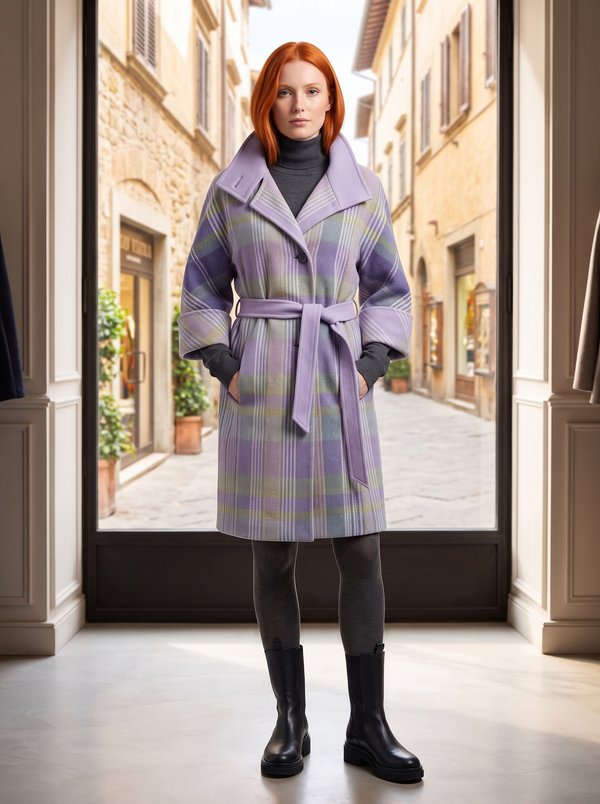
Coat with Wide Cut-On Collar
#5834
Short Sleeve Coat
#5835
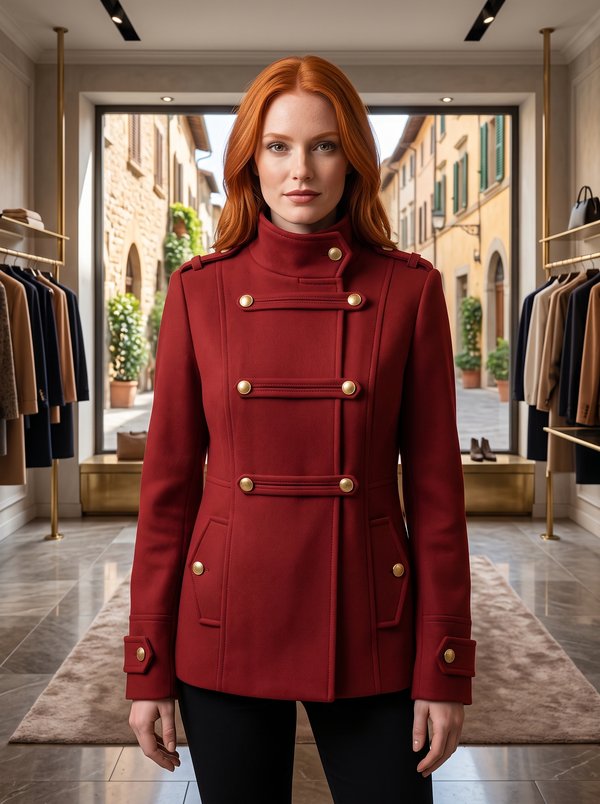
Double-Breasted Military Style Coat with Stand Collar
#5836
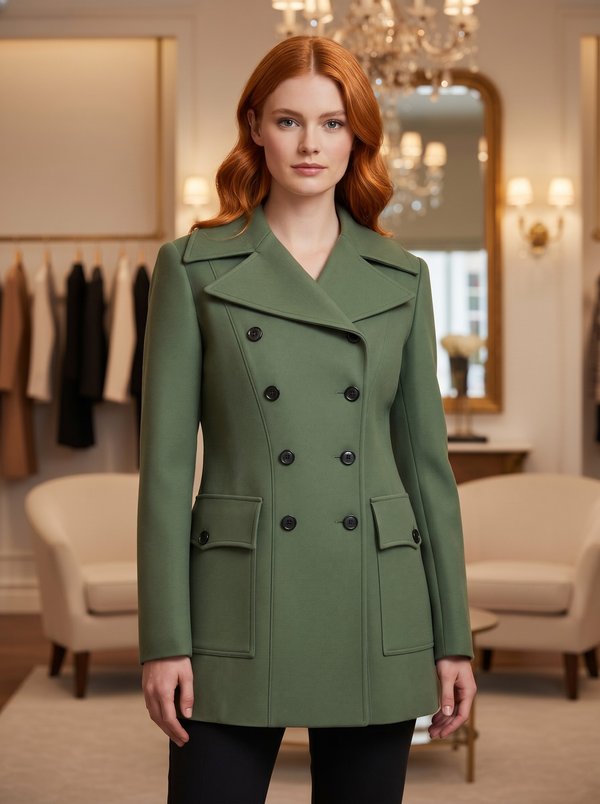
Double-breasted Notched Lapel Short Coat

#5910
Short Coat with Rounded Collar
#5914
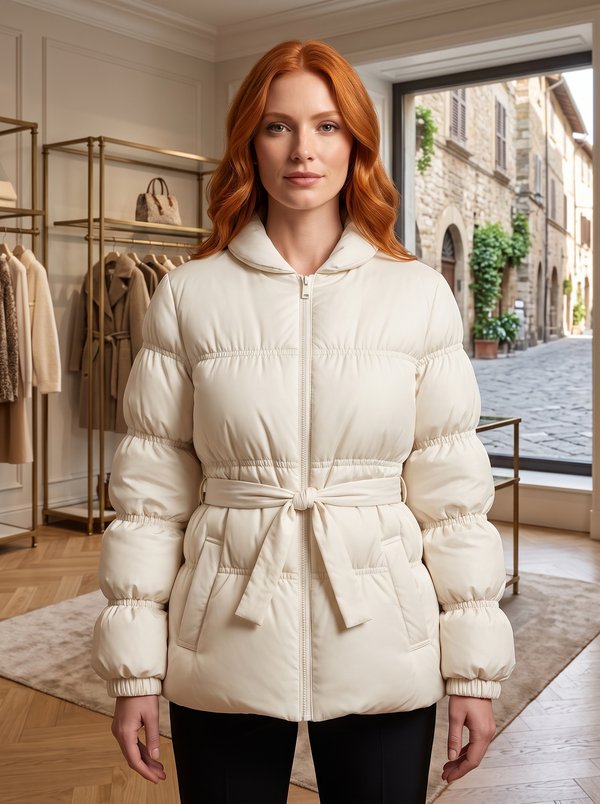
Quilted Belted Jacket with Welt Pockets

#5916
Stand Collar Belted Trench

#5511
Knee Length Double Breasted Notched Lapel Dress-Coat

Minerva Support
Online