Professional made-to-measure digital sewing patterns — PDF · PLT · DXF AAMA
A fitted women's dress above the knee, with a two-tone front: a curved asymmetric seam runs from the neckline to the hem and is trimmed with eight buttons. Round bias-bound neckline, three-quarter set-in sleeves with cuffs, invisible zipper and a slit at the centre back. Drafted to your own measurements. Recommended fabric: low-stretch knit or dress fabrics with added elastane, of natural or blended fibres, in two contrasting or related colours.
A fitted women's dress above the knee, with a two-tone front: a curved asymmetric seam runs from the neckline to the hem and is trimmed with eight buttons. Round bias-bound neckline, three-quarter set-in sleeves with cuffs, invisible zipper and a slit at the centre back.
Silhouette: Close-fitting and straight, with a dart on the right front and darts in the back.
Length: Above the knee.
Neckline: Round, bound with a 4 cm bias strip folded in half and topstitched along the fold.
Sleeves: Three-quarter length, set in with an eased sleeve cap. Interfaced cuffs with overlapping ends, seam allowance topstitched 0.5 cm.
Front: Two asymmetric parts of different sizes, cut from two fabrics and joined by a curved seam from the neckline to the hem. Eight buttons are sewn along the seam.
Back: Centre back seam with an invisible zipper and a slit at the hem, its allowances topstitched 0.2 cm.
Finishing: Hem turned up and slip-stitched by hand. The cuffs are cut from the same fabric as the left front.
Intermediate. A long curved seam joining two fabrics, an invisible zipper above a slit, a bias-bound neckline and set-in sleeves with cuffs.
Low-stretch knit or dress fabrics with added elastane, of natural or blended fibres, in two contrasting or related colours.
If the patterns have a double contour, seam allowances are included. If the contour is single, seam allowances are not included. Seam allowances: all seams 1 cm; allowance along the slit – 2 cm; hem allowance for the dress bottom – 3.0 cm. Attention! First, print out the paper patterns and lay them out on the fabric width (fabric width can be from 90cm to 150cm) to determine how much material you will need (don't forget to account for paired and symmetrical details). When stitching pieces, pay attention to the notches - they must match!

#4867
Short Sleeve Ruffled Neck Peplum Dress

#4869
Buttoned Strap Pinafore Dress with Pockets
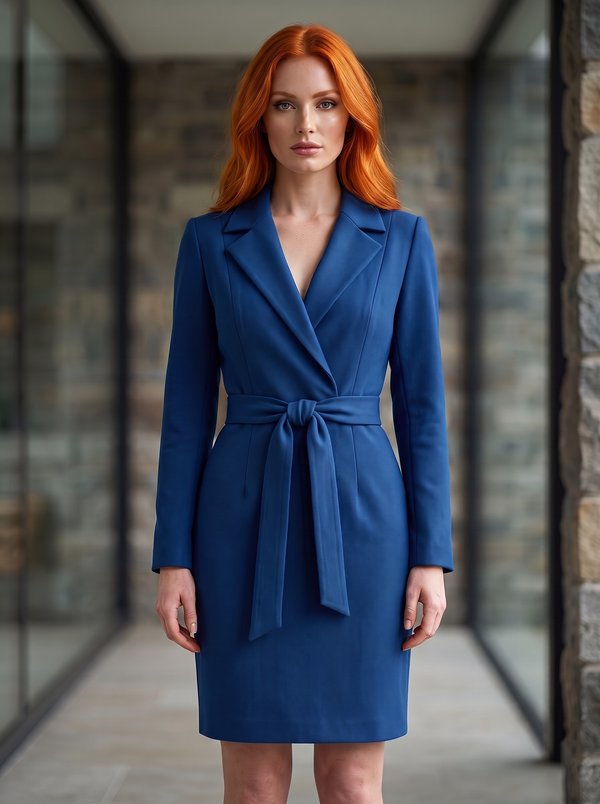
#4870
Tailored Notched Lapel Wrap Dress
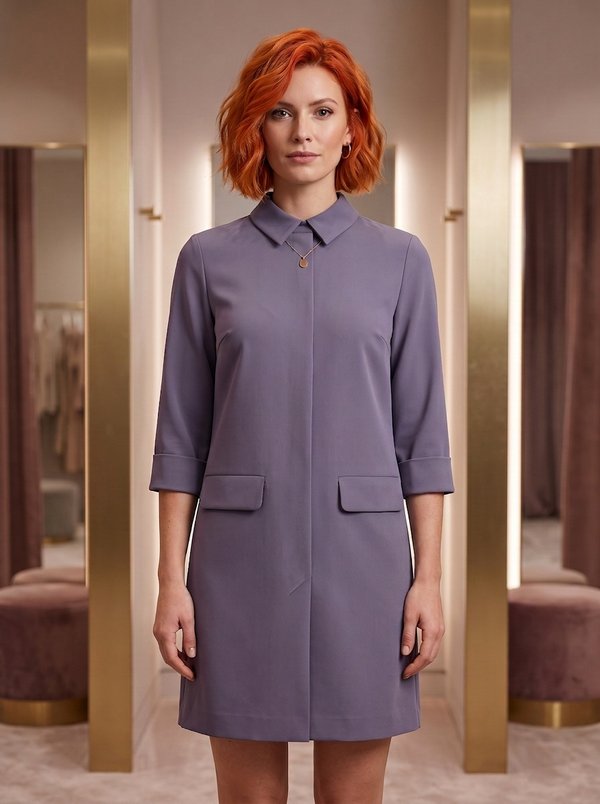
#4864
Collared 3/4 Sleeve Flap Pocket Tunic Dress

#4862
Ruffled V-Neck Short Sleeve Dress

#4861
V Neck Ruffled Capelet Sheath Dress

#4860
Paneled Sheath Elbow Sleeve Dress
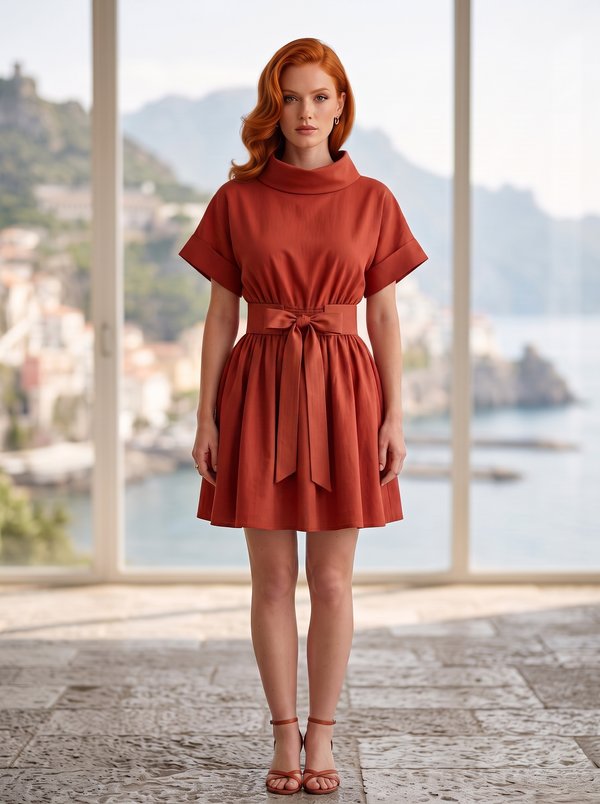
#4858
Rolled Collar Cuffed Sleeve Tie Waist Dress

Minerva Support
Online