Professional made-to-measure digital sewing patterns — PDF · PLT · DXF AAMA
A hip-length women's top for knit fabric with wide dolman sleeves cut in one with the body, soft pleats at the front shoulders and a waist shirred with elastic thread. A curved overlay piece set into the front waist seam gives the peplum a wrapped look. Drafted to your own measurements. Recommended fabric: fluid jersey with medium stretch, of natural or blended fibres.
A hip-length women's top for knit fabric with wide dolman sleeves cut in one with the body, soft pleats at the front shoulders and a waist shirred with elastic thread. A curved overlay piece set into the front waist seam gives the peplum a wrapped look.
Silhouette: Loose and bloused above the waist, with a short peplum below the shirred waistline.
Length: Hip length.
Neckline: Wide round neckline, turned to the inside and topstitched.
Sleeves: Dolman sleeves cut in one with the front and back; the upper sleeve edges are hemmed separately and joined by hand tacks at the marks.
Front: Upper front cut on the fold with pleats at the shoulders; lower front joined at the waist with a hemmed, curved overlay piece set into the same seam.
Back: One piece cut on the fold.
Waist: Shirred with elastic thread along the front waist seam and along a marked line on the back.
Finishing: Hem overlocked, turned and topstitched.
Beginner. Four pieces and no fastenings; the main skills are sewing knit fabric and shirring with elastic thread.
Fluid jersey with medium stretch, of natural or blended fibres.
If the patterns have a double contour, they include seam allowances. If the contour is single, the patterns do not include seam allowances. Seam allowances: hem allowance for the garment and front facing - 1.5 cm; neckline allowance for the back and front - 1.5 cm; allowance for the upper edges of the sleeves - 1.5 cm; other seams 0.7 cm. Attention! First, print out the paper patterns and lay them out on the fabric width (fabric width can be from 90 cm to 150 cm) to determine how much material you will need.
When stitching pieces, pay attention to the notches - they must match! Markings are given on the right side. Tip: Knit fabric pieces are stitched with a special elastic or narrow zigzag stitch. The hem allowance is topstitched with a twin needle to maintain elasticity. You can also stitch pieces directly on a 3- or 4-thread overlock machine.
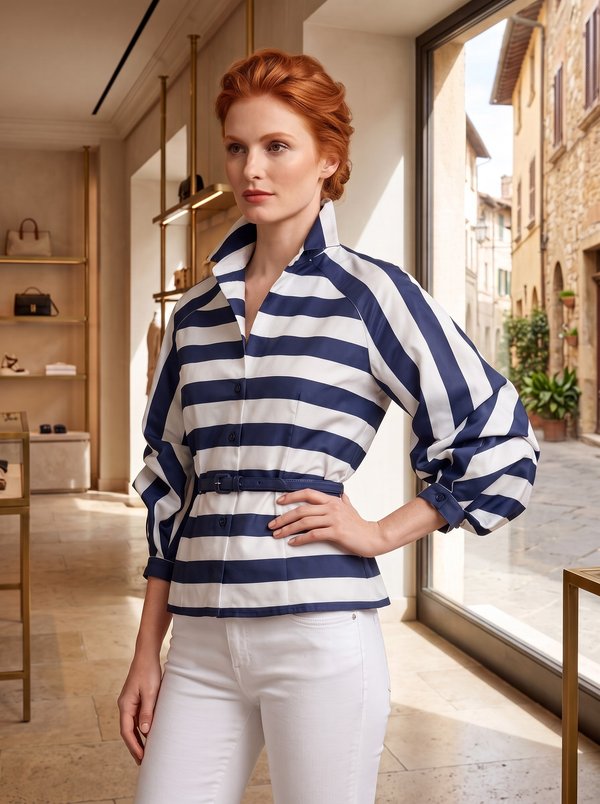
#4121
Raglan Sleeve Balloon Blouse
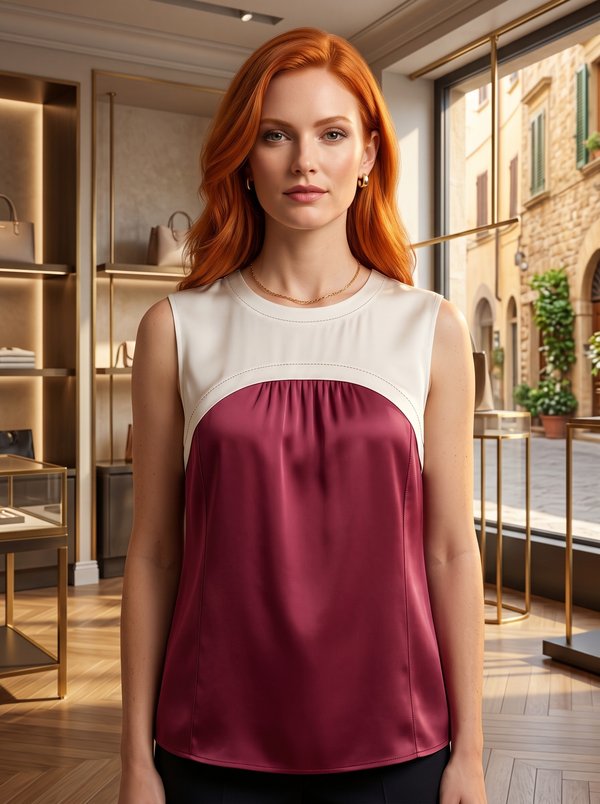
#4109
Two-Tone Sleeveless Blouse with Yoke
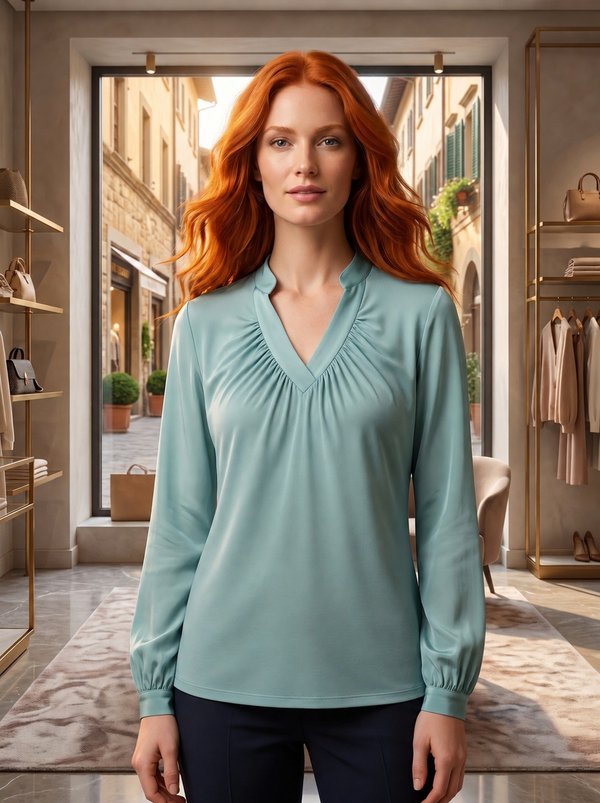
#4100
Knit Blouse with Silk Contrast Details
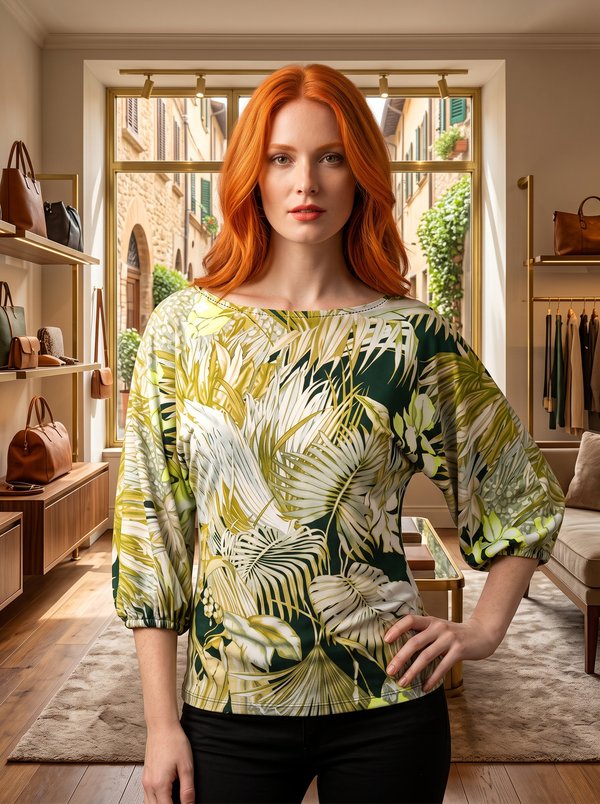
#4099
Boat Neck Balloon Sleeve Blouse

#4096
Knit Collared Wrap Top with Long Cuffed Sleeves
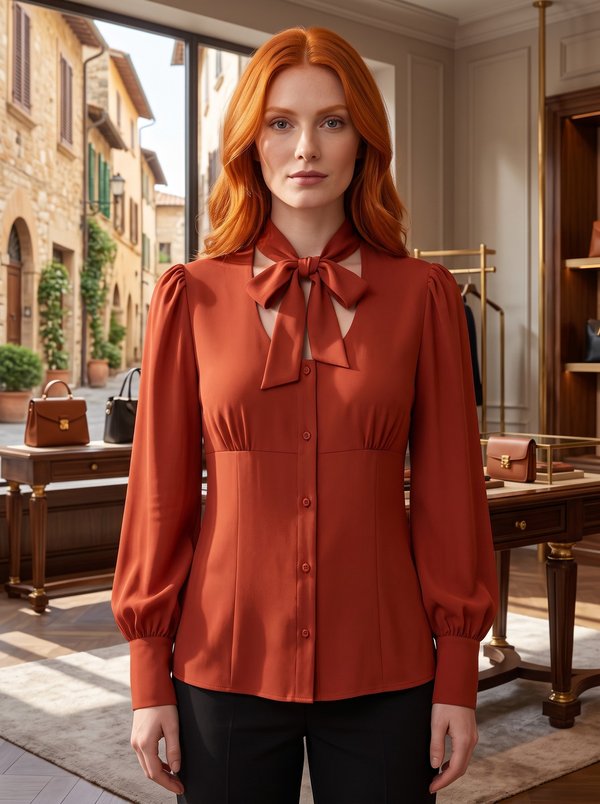
#4090
Puffed Sleeve Pussy Bow Fitted Blouse
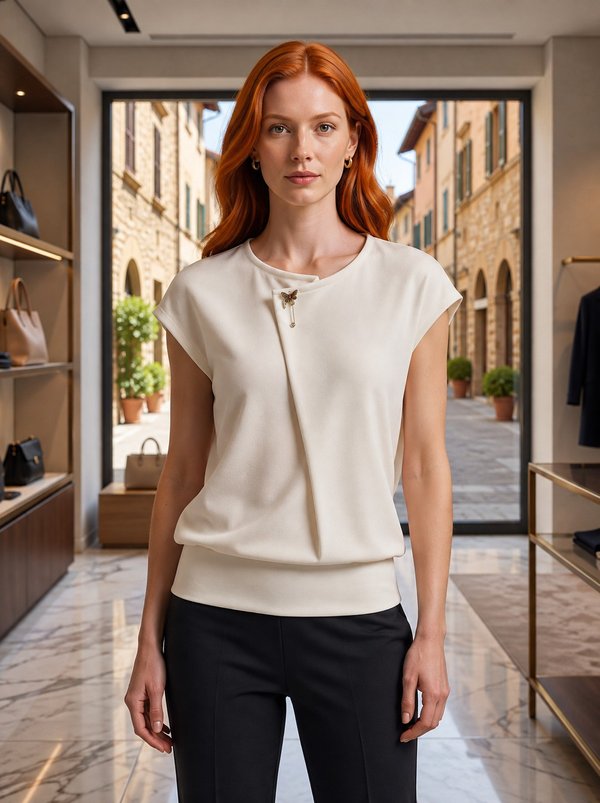
#4087
Asymmetric Front Fold Top
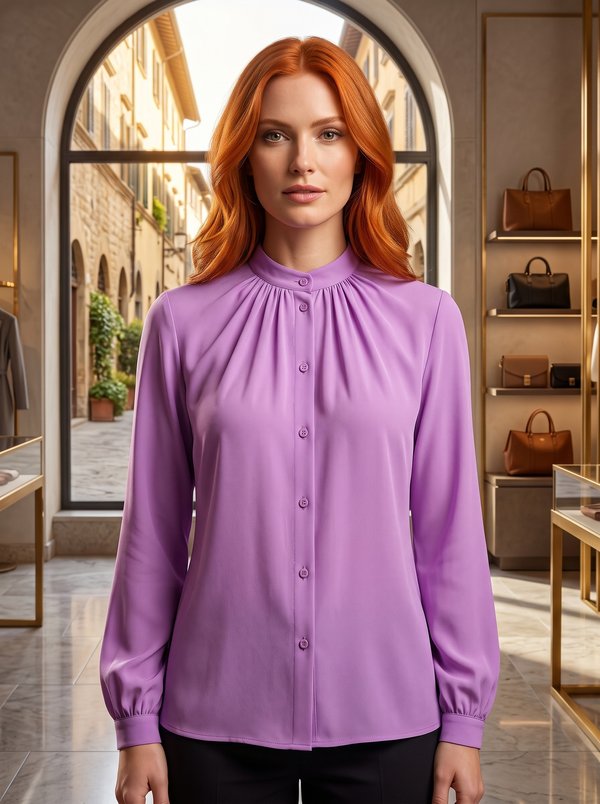
#4086
Stand Collar Button-Front Blouse

Minerva Support
Online