Professional made-to-measure digital sewing patterns — PDF · PLT · DXF AAMA
A women's above-the-knee dress for low-stretch knit fabric, shaped by stitched waist tucks on the front and back. Full long sleeves have inverted pleats at the cap and rib-knit cuffs; the round neckline has a rib-knit band. Drafted to your own measurements. Recommended fabric: low-stretch knit of natural or blended fibres (French terry).
A women's above-the-knee dress for low-stretch knit fabric, shaped by stitched waist tucks on the front and back. Full long sleeves have inverted pleats at the cap and rib-knit cuffs; the round neckline has a rib-knit band.
Silhouette: Fitted at the waist by tucks, flaring slightly to the hem; length above the knee.
Neckline: Round neckline with a rib-knit band cut as a ring, folded in half and sewn on slightly stretched.
Sleeves: Long, full balloon sleeves with inverted pleats at the sleeve cap, set into open armholes and sewn closed together with the side seams. The fullness at the wrist is held by folded rib-knit cuffs.
Front: One piece cut on the fold, with vertical waist tucks.
Back: Centre back seam and vertical waist tucks. No closure; the dress pulls on over the head.
Finishing: Overlocked seams; 3 cm hem turned up and topstitched with a twin needle.
Beginner. Few pieces and no closure; waist tucks and sleeve-cap pleats are marked on the pattern and need accurate transfer.
Low-stretch knit of natural or blended fibres (French terry). Rib knit for the cuffs and neckband.
If the patterns have a double contour, seam allowances are included. If the contour is single, patterns are without seam allowances. Seam allowances: hem allowance – 3 cm. All other seams 1 cm. Attention! First, print out the paper patterns and lay them out on the fabric width (fabric width can be from 90cm to 150cm) to determine how much material you will need (do not forget to account for paired and symmetrical pieces). When stitching pieces, pay attention to the notches - they must match!
Tip: Knit fabric pieces are stitched with a special elastic or narrow zigzag stitch. When serging, trim seam allowances to 0.6 – 0.8 cm. The hem allowance is topstitched with a twin needle to maintain elasticity.
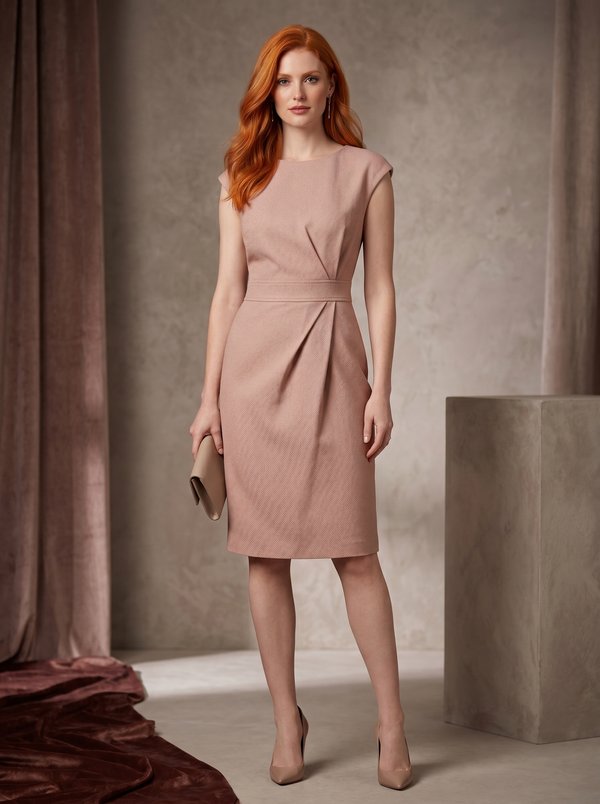
#2870
Cap Sleeve Draped Waist Sheath Dress

#2872
Buttoned Shirt Dress with Patch Pockets and Belt

#2864
V-Yoke Panelled Sweatshirt Dress

#2874
Long Sleeve Pointed Collar Diagonal Seam Dress
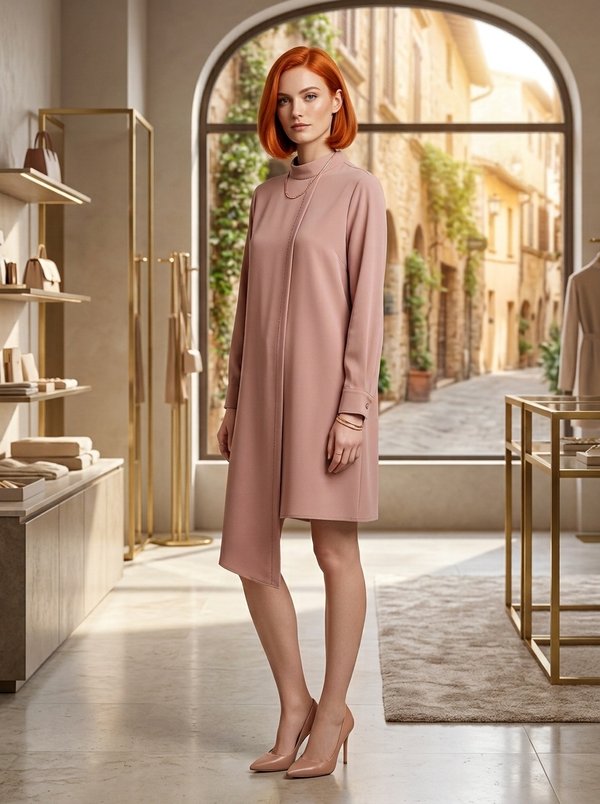
#2862
Asymmetric Hem Stand Collar Dress
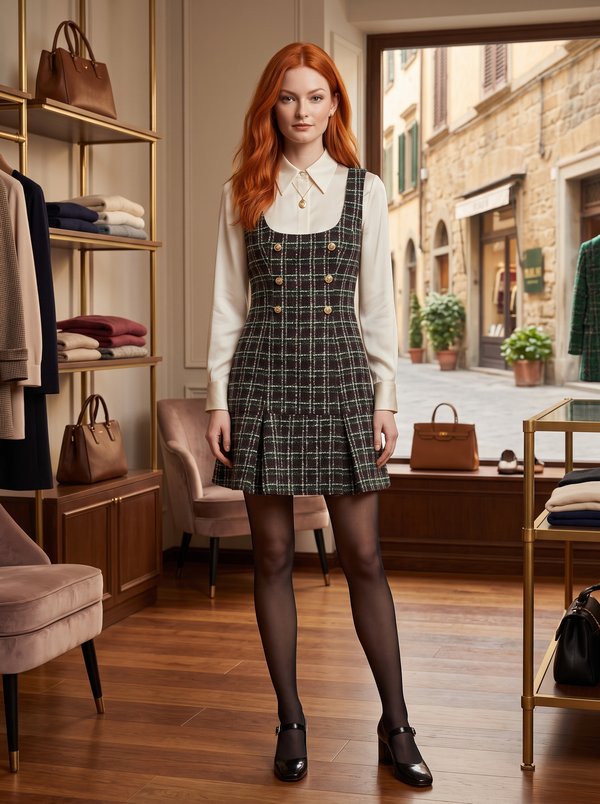
#2876
Fitted Tweed Pinafore Dress

#2861
Asymmetrical Paneled Sheath Dress

#2860
Cape Sleeve Dress with Ruffle Hem

Minerva Support
Online