Professional made-to-measure digital sewing patterns — PDF · PLT · DXF AAMA
A women's above-the-knee dress with dolman sleeves cut as separate front and back sleeve panels, joined to the body by curved seams that run from the neckline down to the hips. In-seam side pockets, a concealed zipper and a slit in the centre back seam. Drafted to your own measurements. Recommended fabric: dress fabrics from natural or blended fibres.
A women's above-the-knee dress with dolman sleeves cut as separate front and back sleeve panels, joined to the body by curved seams that run from the neckline down to the hips. In-seam side pockets, a concealed zipper and a slit in the centre back seam.
Silhouette: Roomy through the shoulders and sleeves, narrowing slightly towards the hem.
Length: Above the knee.
Neckline: Round neckline finished with front and back facings.
Sleeves: Dolman sleeves, below the elbow, each made of a front and a back sleeve piece; the sleeve seam is stitched in one pass with the side seam.
Front: One piece cut on the fold, with the sleeve pieces attached along curved seams.
Pockets: In-seam pockets in the side seams, with pocket bags cut from the main fabric.
Back: Centre back seam with a concealed zipper from the neckline and a slit at the hem, topstitched 0.1 cm from the fold.
Finishing: Hems of the dress and sleeves turned up 2 cm and sewn by hand with blind stitches; 2.5 cm allowance along the slit, which is interfaced.
Intermediate. Long curved seams joining sleeve panels to the body, a concealed zipper, a back slit and in-seam pockets sewn together with the side seam.
Dress fabrics from natural or blended fibres.
When stitching pieces, pay attention to the notches - they must match!

#2699
Square Neck Puffed Sleeve Tie Front Dress

#2687
Shirt Dress with Gathered Sleeves

#2679
Princess Seam Short Sleeve Midi Dress

#2710
Round Neck Cap Sleeve Panel Seam Dress

#2716
Wrap Pleated Blazer Dress

#2670
Fitted Draped Ruched Cap Sleeve Dress
#2667
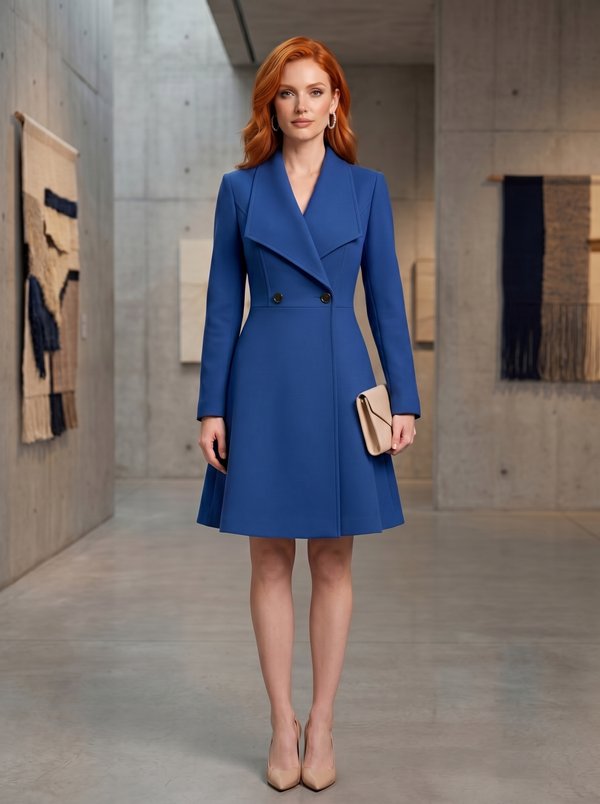
Wide Lapel Double-Breasted Flared Coat Dress

#2723
Halter-Neck Sheath Dress with Pleated Neckline

Minerva Support
Online