Professional made-to-measure digital sewing patterns — PDF · PLT · DXF AAMA
A women's A-line skirt below the knee with a separate overlay panel (fly piece) on the front, held in draped folds by four buttons sewn through both layers. The overlay drops to a long point at one side, giving an asymmetric hem. Drafted to your own measurements. Recommended fabric: dense skirt fabrics of natural or blended fibres.
A women's A-line skirt below the knee with a separate overlay panel (fly piece) on the front, held in draped folds by four buttons sewn through both layers. The overlay drops to a long point at one side, giving an asymmetric hem.
Silhouette: A-line, flaring from the waistband to the hem.
Length: Below the knee, with the overlay and the hem dropping to a point at one side.
Front: A one-piece front skirt with a separate overlay panel laid on top and basted to it at the side and upper edges. The curved centre edge and lower edge of the overlay are overlocked, turned under and topstitched; the curved edge has a 1.5 cm allowance.
Closure: Invisible zipper in the left side seam; the waistband closes with one button and buttonhole.
Back: One piece cut on the fold, with no centre back seam.
Waist: Straight waistband, fully interfaced, with the inner edge turned under and stitched in the ditch.
Finishing: Four decorative buttons sewn through the overlay and the front skirt at the marks; hem overlocked, turned up 2 cm and topstitched.
Intermediate. Hemming a long curved edge, an invisible side zipper, a waistband with turned ends and a buttonhole.
Dense skirt fabrics of natural or blended fibres.
If the patterns have a double contour, seam allowances are included. If the contour is single, seam allowances are not included. Seam allowances: all seams 1 cm. Hem allowance 2 cm. Allowance along the curved edge of the overlay panel (Fly Piece) – 1.5 cm. Attention! First, print out the paper patterns and lay them out on the fabric width (fabric width can be from 90cm to 150cm) to determine how much material you will need. Attention! Markings on the patterns are made on the right side.
When stitching pieces, pay attention to the notches - they must match!
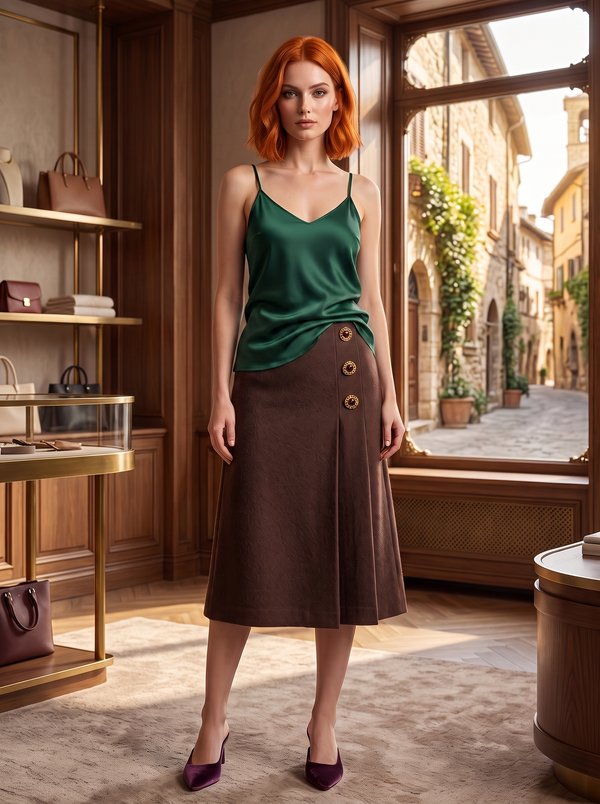
#2658
Pleated Skirt

#2668
Midi Mock Wrap Skirt with Button Fly
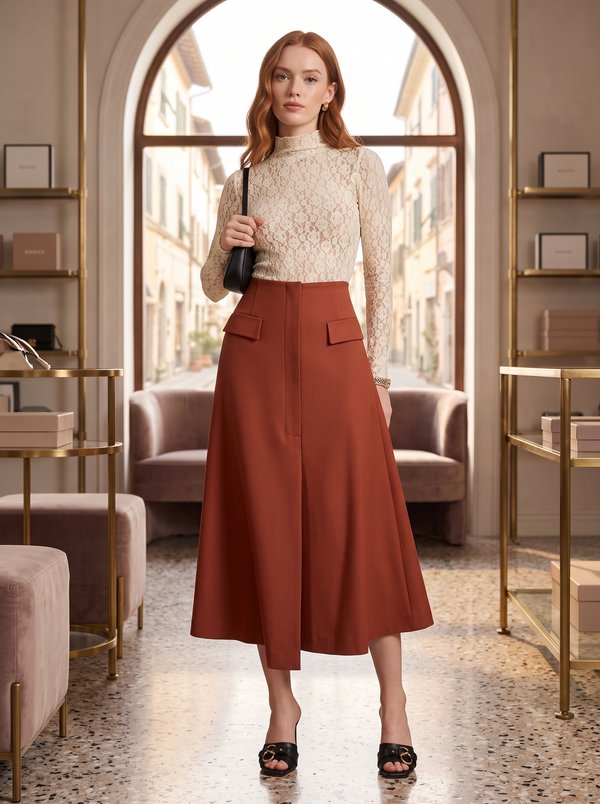
#2674
High Waisted A-Line Midi Skirt with Decorative Flaps
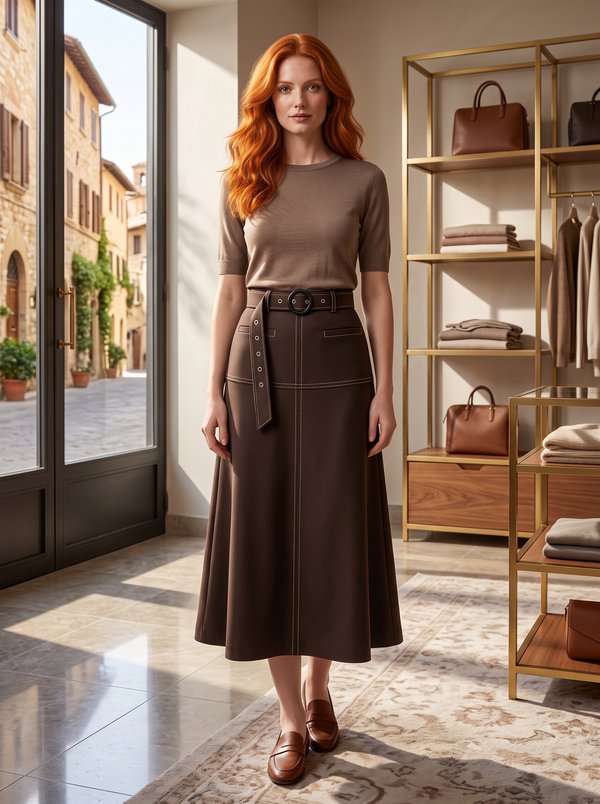
#2676
High Waist Belted A-Line Midi Skirt
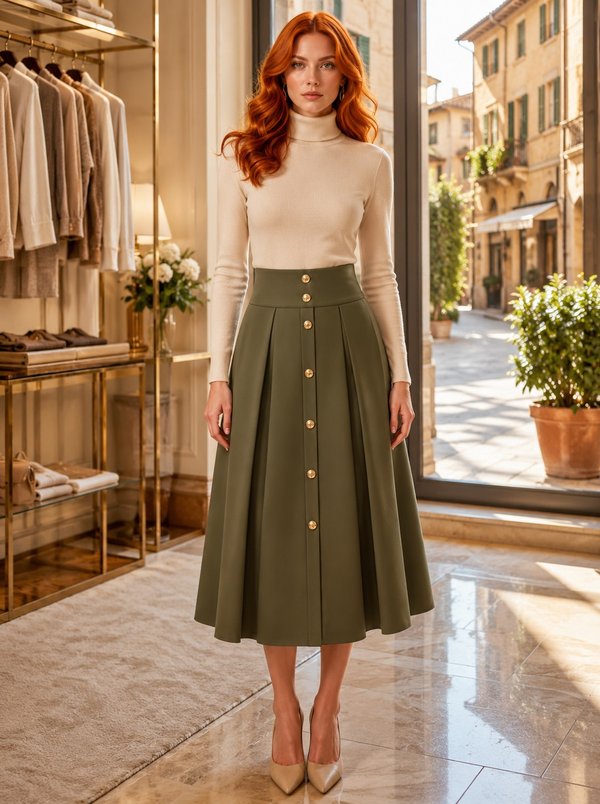
#2641
Pleated Front A-line Skirt
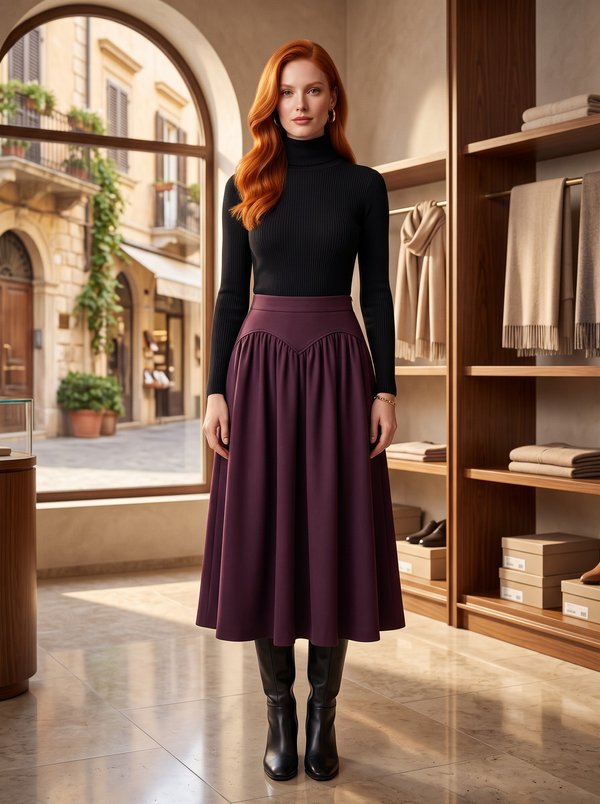
#2638
Maxi Flared Skirt with Gathered V-Yoke
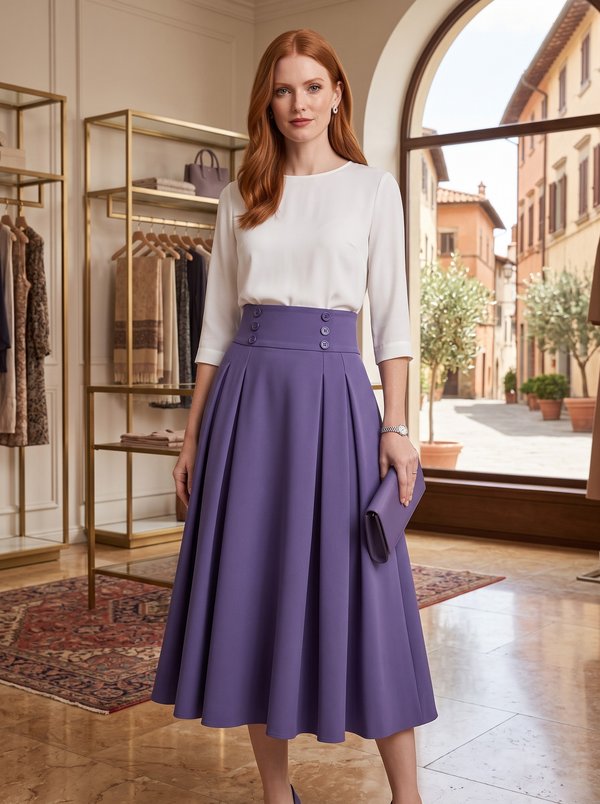
#2634
High-Waist Pleated Midi Skirt with Button Yoke
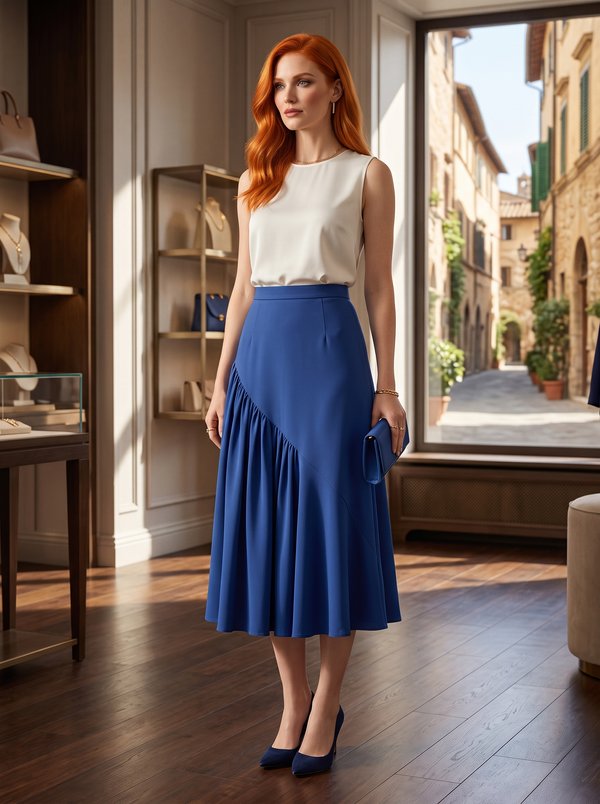
#2633
Midi Asymmetrical Panel Skirt

Minerva Support
Online