Professional made-to-measure digital sewing patterns — PDF · PLT · DXF AAMA
A sleeveless A-line women's tunic with extended shoulders, a deep inverted pleat at the centre front and pockets hidden in the front darts. Closes with an invisible zipper in the centre back seam. Drafted to your own measurements. Recommended fabric: dress fabrics of natural or blended fibres.
A sleeveless A-line women's tunic with extended shoulders, a deep inverted pleat at the centre front and pockets hidden in the front darts. Closes with an invisible zipper in the centre back seam.
Silhouette: A-line, widening from the bust to the hem.
Length: Mid-thigh.
Neckline: Round, finished with interfaced front and back facings that are secured to the shoulder seams and the zipper tape.
Sleeves: Sleeveless with cut-on extended shoulders; the armhole allowance is overlocked, turned in and topstitched.
Front: One piece cut on the fold. The inverted pleat is stitched down from the neckline to a mark and falls open below.
Pockets: In-dart pockets: the pocket bags are attached to the front and closed in the same seam as the darts, so the openings sit in the dart lines.
Back: Centre back seam with an invisible zipper from the neckline.
Finishing: Hem overlocked, turned up 2 cm and topstitched.
Beginner. Few pieces and straight seams; the pockets sewn into the darts and the invisible zipper need care.
Dress fabrics of natural or blended fibres.
If the patterns have a double contour, the patterns include seam allowances. If the contour is single, the patterns do not include seam allowances. Seam allowances: hem allowance – 2 cm, armhole allowance for back and front – 1.5 cm, other seams 1 cm. Attention! First, print out the paper patterns and lay them out on the fabric width (fabric width can be from 90 cm to 150 cm) to determine how much material you will need.
When stitching pieces, pay attention to the notches - they must match!
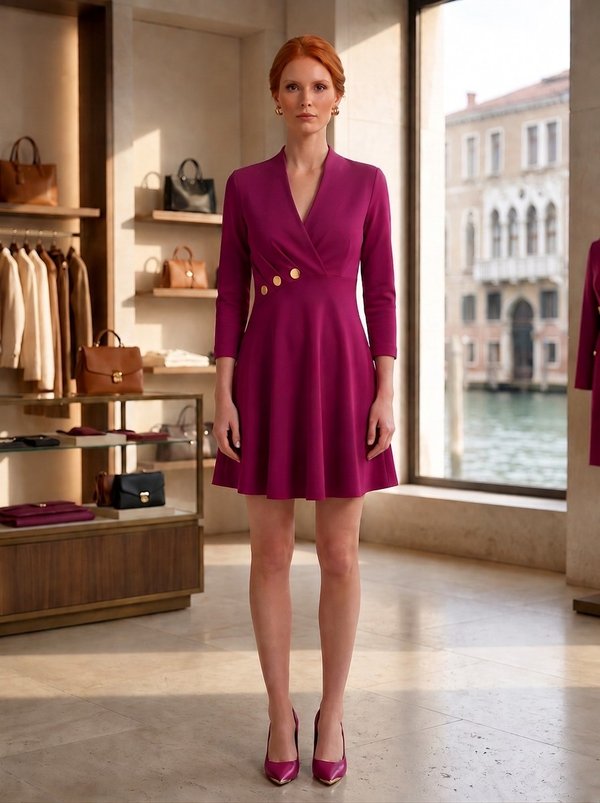
#4778
Asymmetrical Wrap Flared Dress
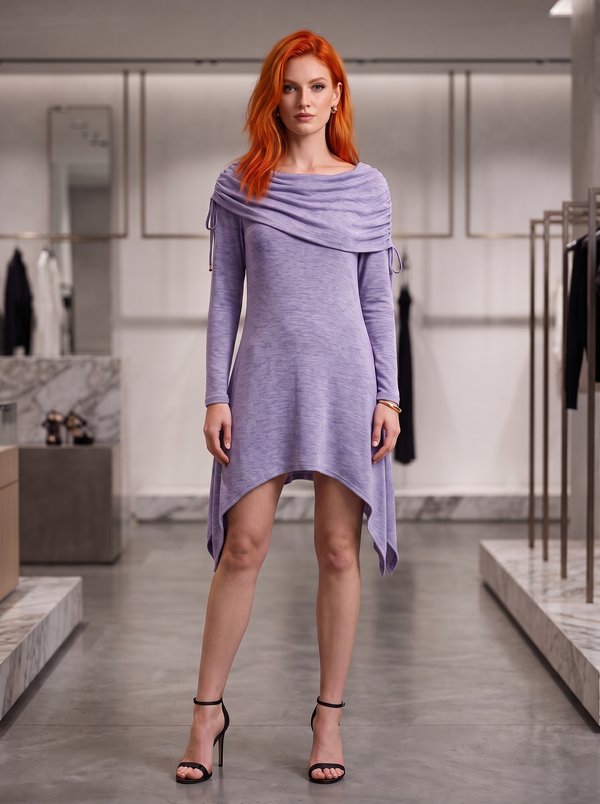
#4816
Drawstring Draped Neck Tunic with Handkerchief Hem
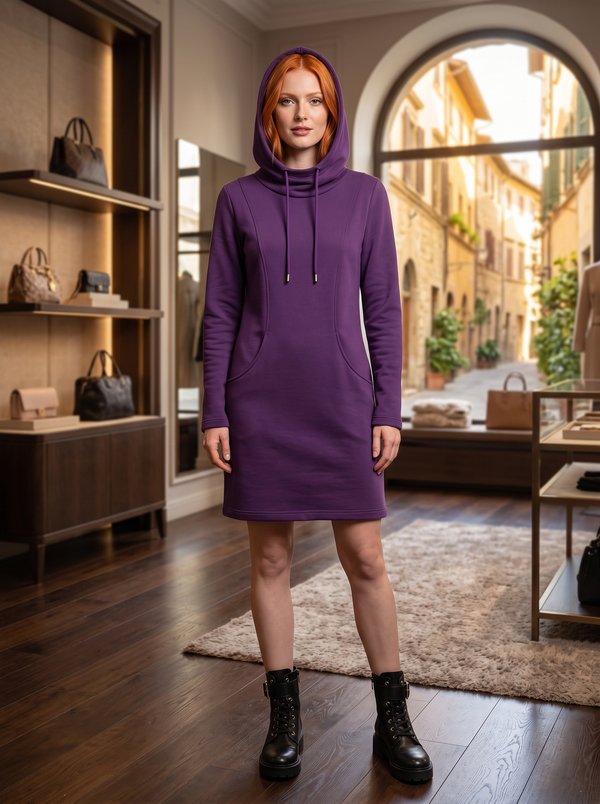
#4742
Hooded Dress with Side Pockets
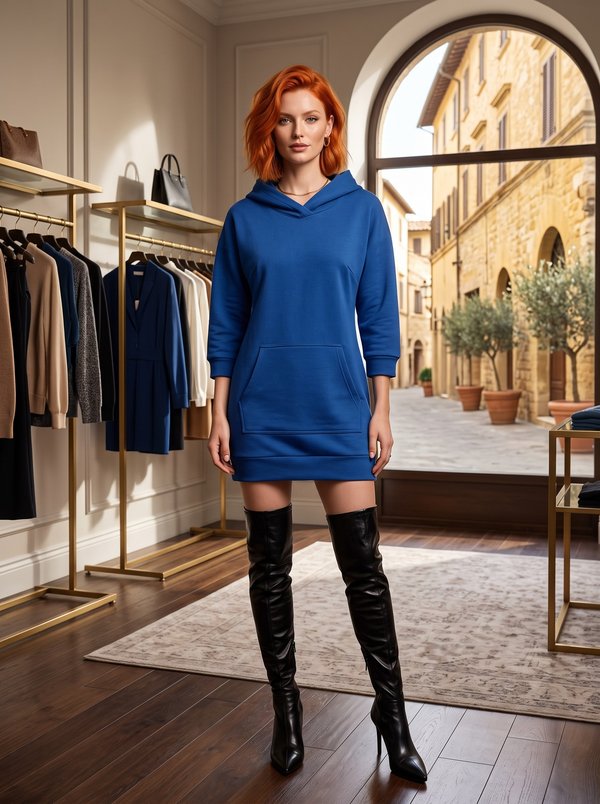
#4709
Hooded Knit Dress with Kangaroo Pocket
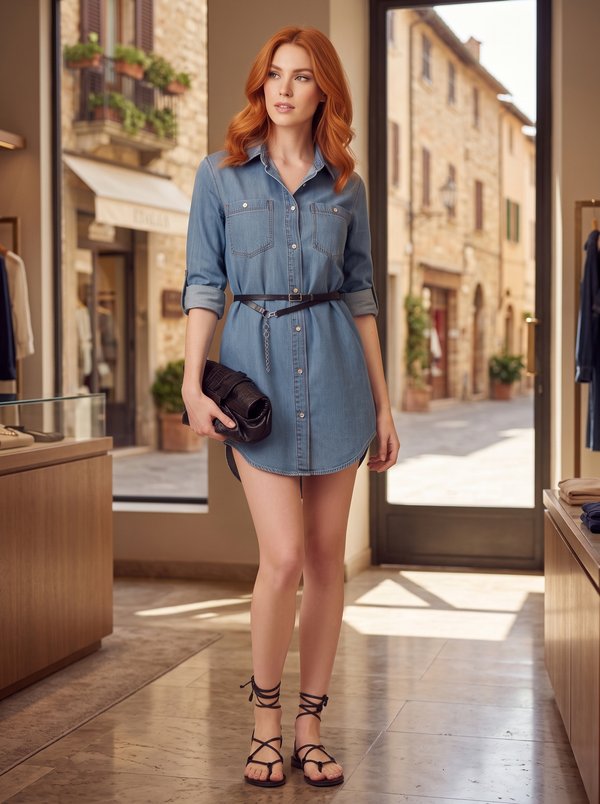
#4663
Denim Shirtdress with Rolled Sleeves
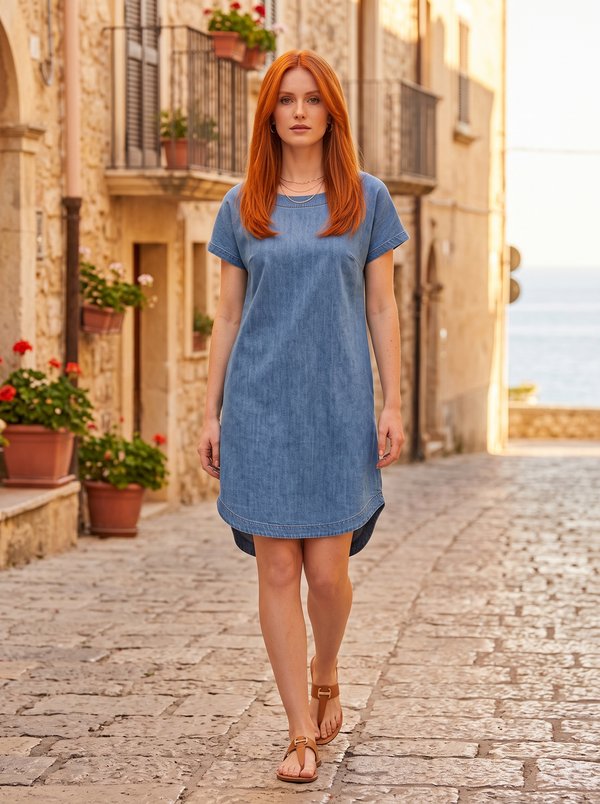
#4628
Loose Fit Short Dolman Sleeve Curved Hem Mini Dress
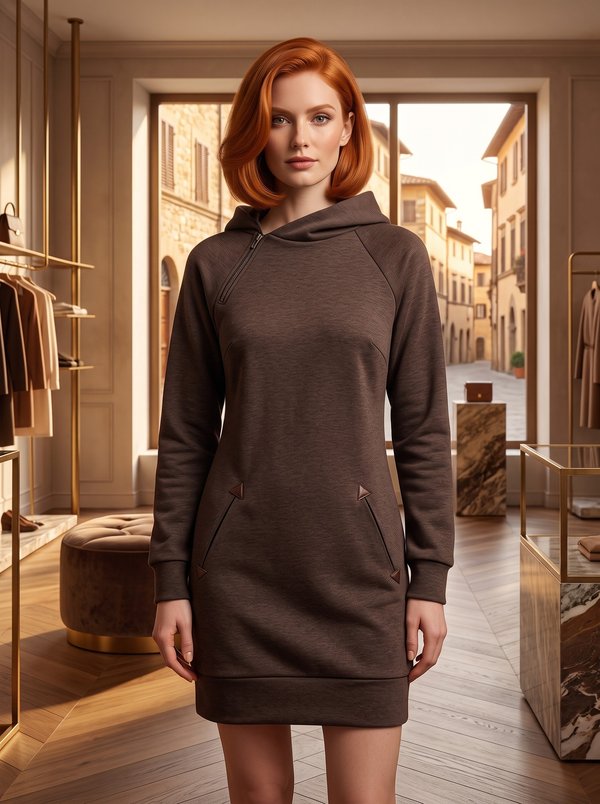
#4587
Hooded Dress With Pockets
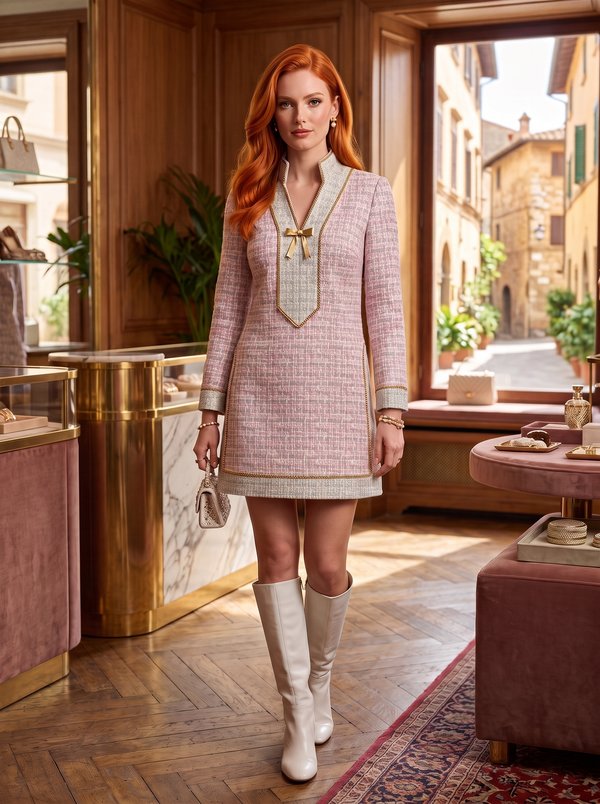
#4571
Long Sleeve Tunic Dress

Minerva Support
Online