Professional made-to-measure digital sewing patterns — PDF · PLT · DXF AAMA
A women's straight-cut blouse with short set-in sleeves and soft pleats laid into the front neckline. The back has a centre seam and a keyhole slit at the neck, fastened with one button and a bias loop. Drafted to your own measurements. Recommended fabric: blouse fabrics made from natural or blended fibres.
A women's straight-cut blouse with short set-in sleeves and soft pleats laid into the front neckline. The back has a centre seam and a keyhole slit at the neck, fastened with one button and a bias loop.
Silhouette: Straight, slightly loose fit with no darts.
Length: Hip length, with a straight hem.
Neckline: Round neckline; the front is cut in one piece on the fold, with pleats on each side of the centre front, turned away from the centre. Finished with fused front and back neckline facings.
Sleeves: Short set-in sleeves, ending above the elbow, with a straight hem.
Back: Two back pieces joined by a centre back seam that stops at a mark below the neckline to form a slit.
Closure: One button at the top of the back slit, with a loop made from a 3 cm bias strip and set into the facing seam.
Finishing: Shoulder, side and sleeve seams overlocked; garment and sleeve hems overlocked, turned up and topstitched.
Beginner. Pleats at the neckline, a faced neckline with a slit and a bias loop, and set-in sleeves; no collar, cuffs or buttonholes.
Blouse fabrics made from natural or blended fibres.
If the patterns have a double contour, the patterns include seam allowances; if the contour is single, the patterns do not include seam allowances. Seam allowances: hem allowance for the garment and sleeve — 2.0 cm; other seams 1 cm. Attention! First, print out the paper patterns and lay them out on the fabric width (fabric width can range from 90 cm to 150 cm) to determine how much material you will need. When stitching pieces, pay attention to the notches - they must match!

#2287
Ruffled Sleeveless Blouse with Back Neck Tie

#2288
Sleeveless Blouse with V-Notch Yoke
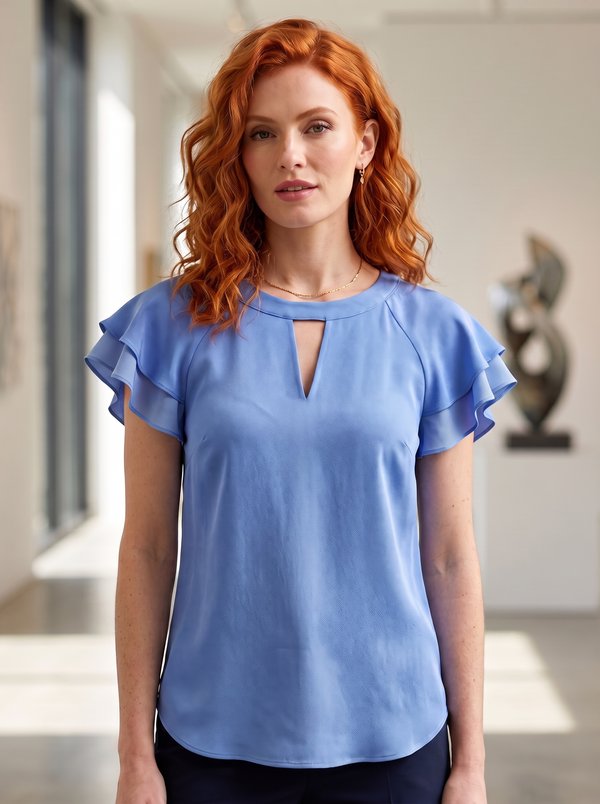
#2283
Flutter Sleeve Keyhole Blouse
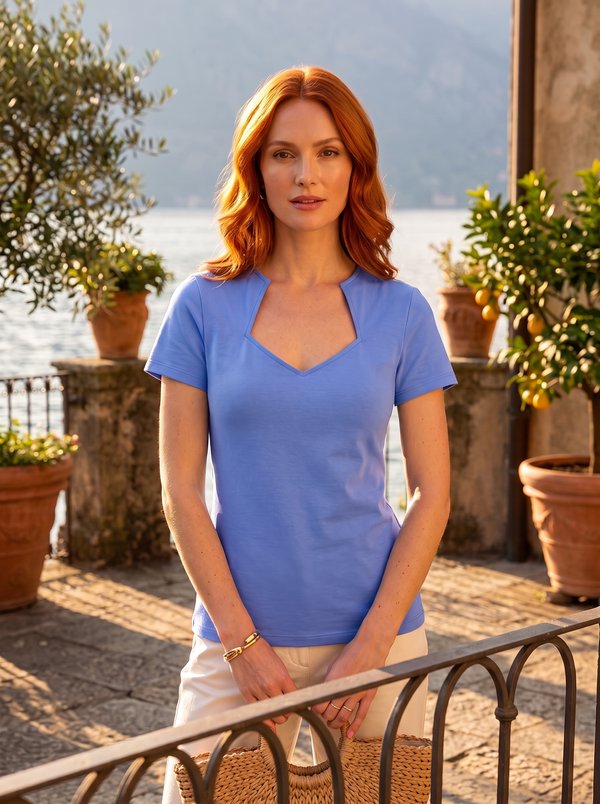
#2280
Geometric V-Neck Knit Top
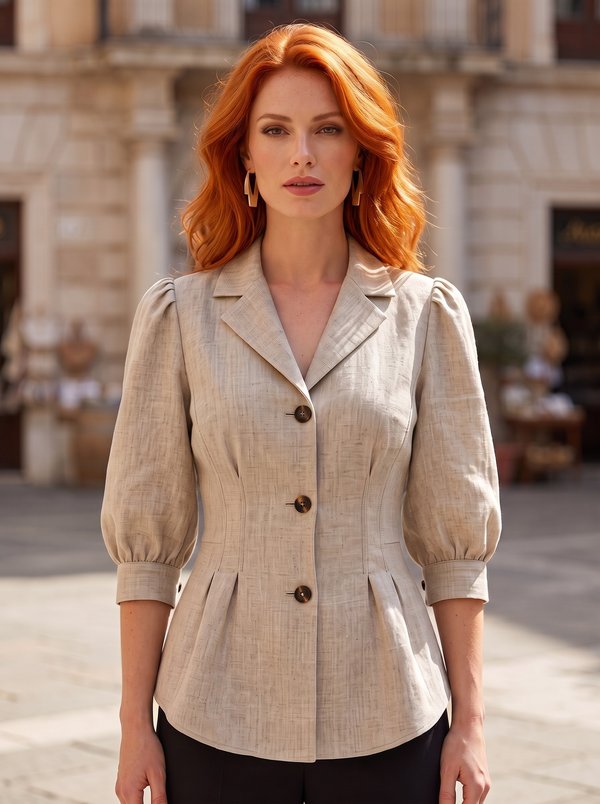
#2292
Notched Lapel Peplum Blouse Puff Sleeves
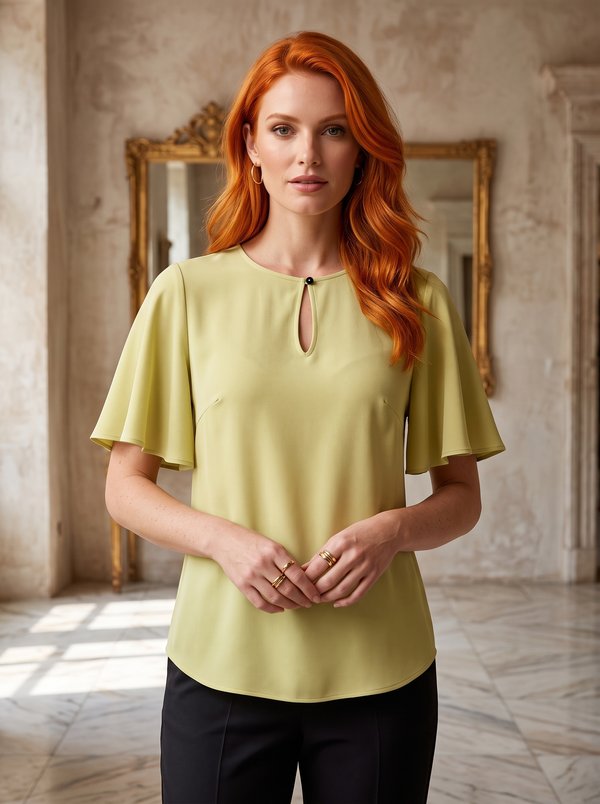
#2293
Keyhole Neck Flutter Sleeve Blouse
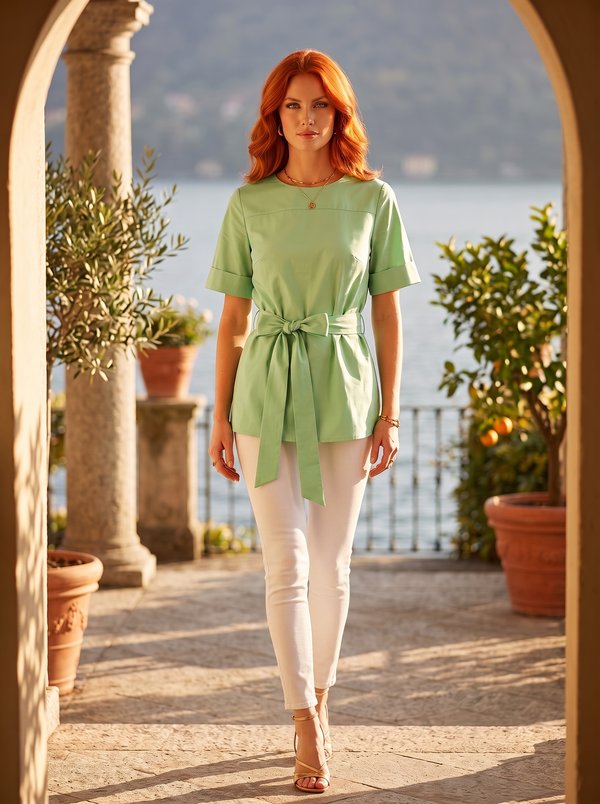
#2294
Short Sleeve Waist Tie Blouson
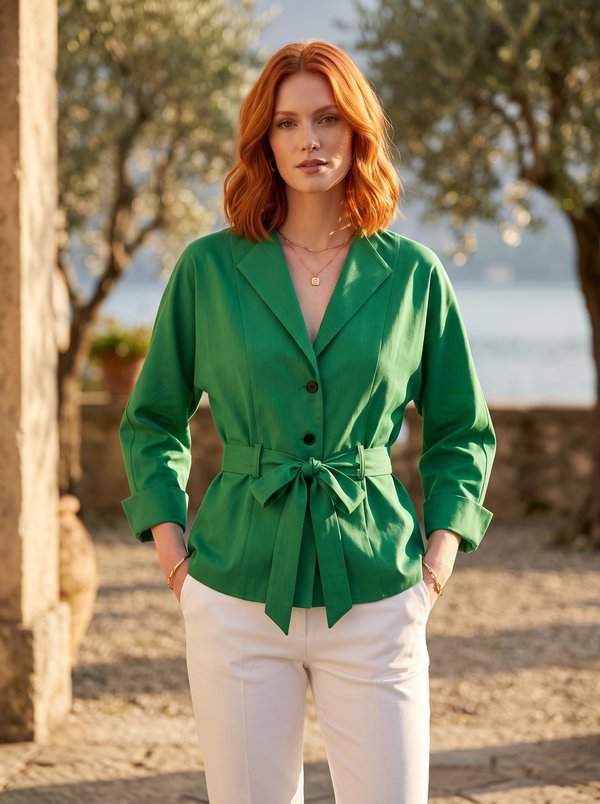
#2277
Notched Lapel Dolman Jacket with Tie Belt

Minerva Support
Online