Professional made-to-measure digital sewing patterns — PDF · PLT · DXF AAMA
A women's blouse with a wide boat neckline finished by a visible outer facing band, a group of stitched-down vertical pleats on one side of the front, and three-quarter sleeves. The hem and the sleeve ends are gathered and bound with bias tape. Drafted to your own measurements. Recommended fabric: light to medium woven blouse fabrics that hold a pressed pleat, such as cotton poplin, cotton lawn, viscose or crepe de chine.
A women's blouse with a wide boat neckline finished by a visible outer facing band, a group of stitched-down vertical pleats on one side of the front, and three-quarter sleeves. The hem and the sleeve ends are gathered and bound with bias tape.
Silhouette: Loose body with bust darts, drawn in at the hip by the gathered, bound hem.
Length: Hip length.
Neckline: Wide boat neckline. Outer facings are stitched to the right side of the front and back and form a band around the neck; inner facings are sewn to the neckline edge, turned inside and topstitched into the seam of the outer facing.
Front: Cut in one piece, not on the fold. Vertical pleats on one side of the front are stitched down from the neckline and pressed to the left side.
Sleeves: Set-in, three-quarter length, with the lower edge gathered and bound.
Back: One piece cut on the fold, with no centre seam and no closure.
Finishing: Hem and sleeve ends gathered with a loosened-tension stitch and bound with bias tape.
Beginner. No closures or collar; the work is in even pleats, a two-layer neckline facing and gathered edges bound with bias tape.
Light to medium woven blouse fabrics that hold a pressed pleat, such as cotton poplin, cotton lawn, viscose or crepe de chine.

#2061
Knit Tweed Top with Asymmetric Bow and 3/4 Sleeves
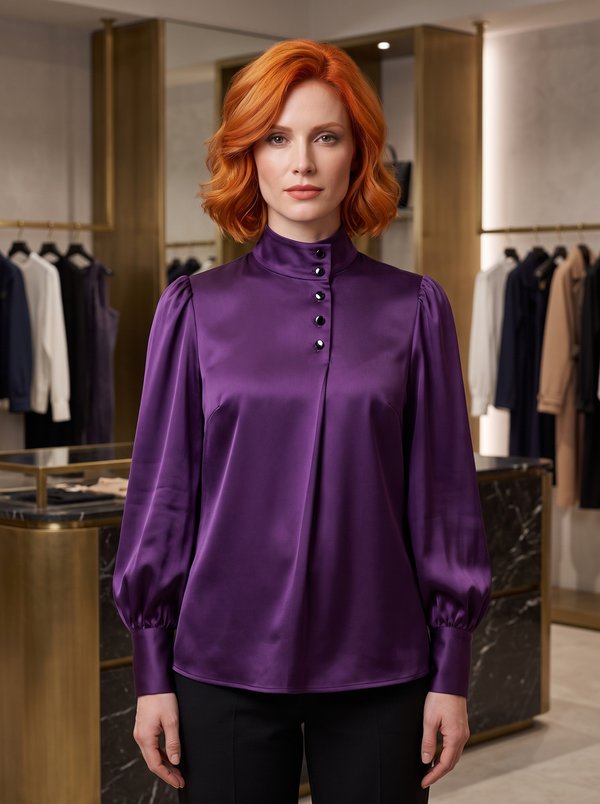
#2064
High Neck Asymmetrical Placket Gathered Sleeve Blouse
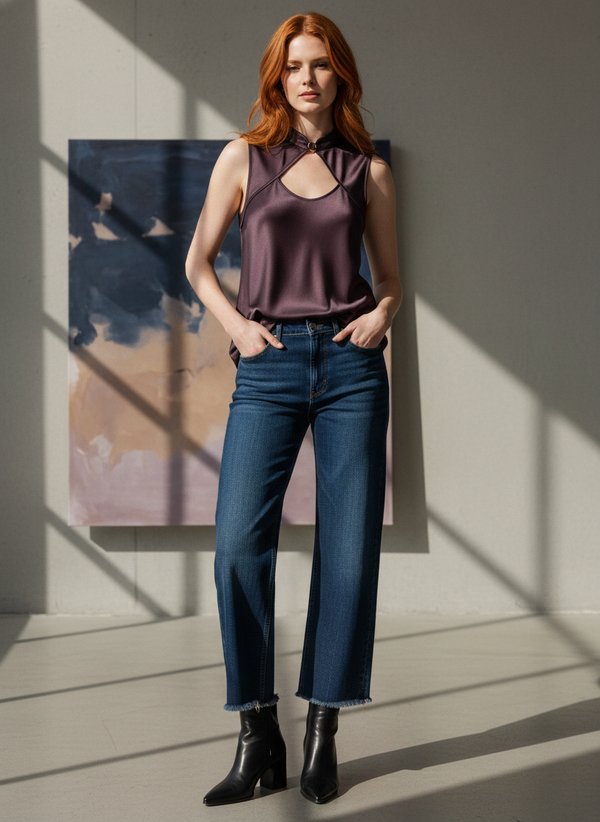
#2059
Sleeveless Keyhole Yoke Top
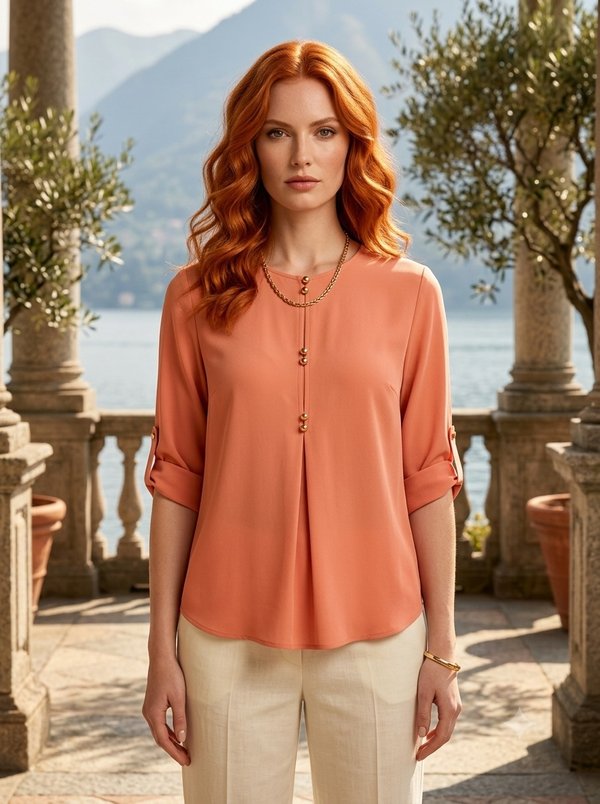
#2067
Blouse Round Neck Pleated Front Tab Sleeves

#2052
Princess Seam Bell Sleeve Blouse
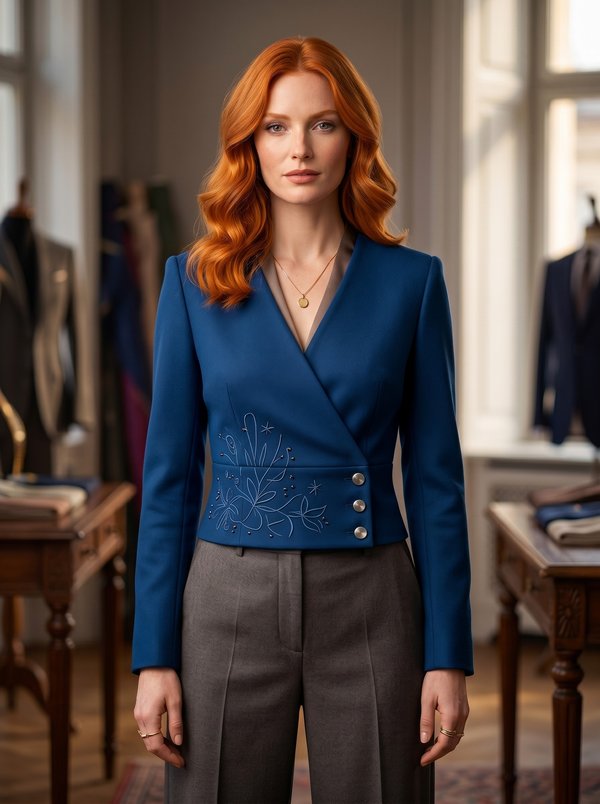
#2049
Cropped Lined Wrap Jacket with Buttoned Waistband
#2046
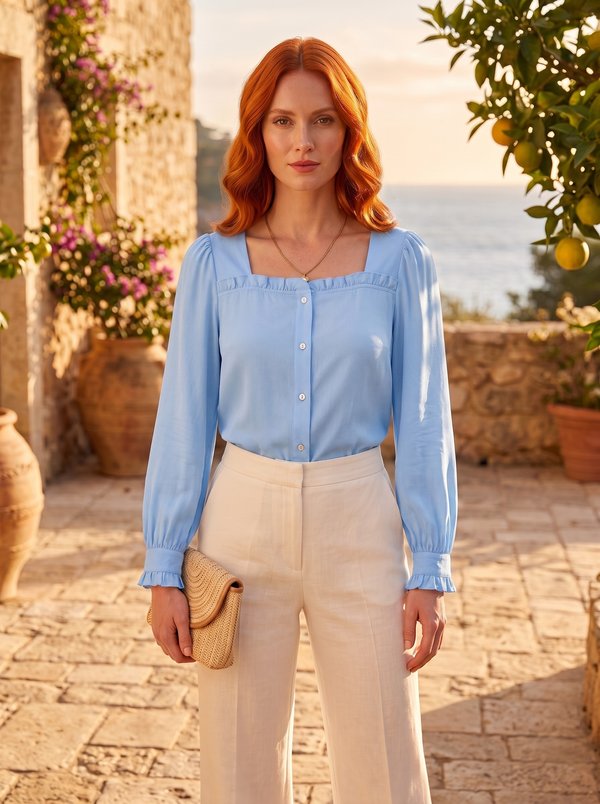
Ruffled Square Neck Blouse
#2041
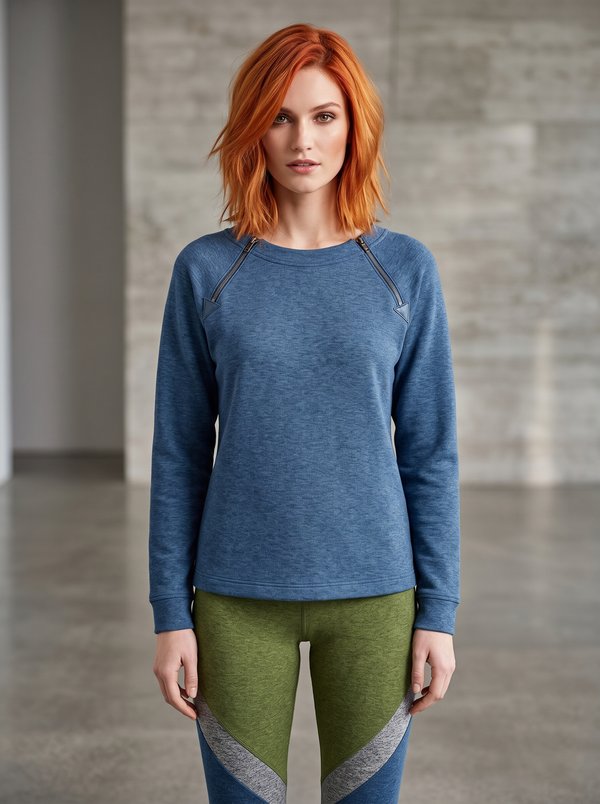
Scoop Neck Raglan Top With Zippers

Minerva Support
Online