Professional made-to-measure digital sewing patterns — PDF · PLT · DXF AAMA
A women's sleeveless, knee-length sheath dress in thin chiffon-type fabric, with a draped panel laid diagonally across the front and five layered flounces on one shoulder. Lined, with a concealed zipper in the centre back seam. Drafted to your own measurements. Recommended fabric: thin, well-draping dress fabrics of natural or blended fibres, such as chiffon and crepe chiffon.
A women's sleeveless, knee-length sheath dress in thin chiffon-type fabric, with a draped panel laid diagonally across the front and five layered flounces on one shoulder. Lined, with a concealed zipper in the centre back seam.
Silhouette: Fitted sheath shaped by bust and waist darts on the front and waist darts on the back.
Length: Around the knee.
Neckline: Round, faced with the lining together with the armholes.
Front: A separate drapery piece with turned and topstitched upper and lower edges is laid over the front, caught into the armhole and side seam on one side and folded into small pleats into the shoulder seam on the other.
Sleeves: Sleeveless. On the draped shoulder, five flounces (two small, two medium, one large) are stitched into the shoulder seam: three fall towards the front, two towards the back. The flounce seam is covered with a narrow strip of the main fabric.
Back: Centre back seam with a concealed zipper from the neckline to a notch.
Finishing: Flounce edges finished with a narrow rolled hem; dress and lining hems turned and topstitched separately.
Lining: Lined to the hem; the lining is cut from the front and back pieces and hand-stitched to the zipper tape.
Intermediate. Handling sheer, slippery fabric, laying and pleating a drapery, rolled-hem flounces joined in tiers, a concealed zipper and a lining that faces the neckline and armholes.
Thin, well-draping dress fabrics of natural or blended fibres, such as chiffon and crepe chiffon.
If the patterns have a double contour, they include seam allowances. If the contour is single, the patterns do not include seam allowances. Seam allowances: all seams 1 cm; allowance for the upper and lower edges of the drapery – 2 cm; allowances for the side and lower edges of the flounces – 0 cm; allowance for the dress hem – 3.5 cm. Attention! First, print out the paper patterns and lay them out on the fabric width (fabric width can be from 90cm to 150cm) to determine how much material you will need (do not forget to account for paired and symmetrical pieces).
Attention: markings on the patterns are applied to the right side, and if cutting is done “face down,” then the drapery and flounce patterns are also placed on the fabric with the marking side down. When stitching pieces, pay attention to the notches - they must match!

#2026
Halter Dress with Folded Stand Collar

#2023
Fit-and-Flare Dress with Horseshoe Neckline Band

#2027
Sheath Dress with Scalloped Neckline Facing

#2022
Empire-Waist Dress with Twisted Bust Detail
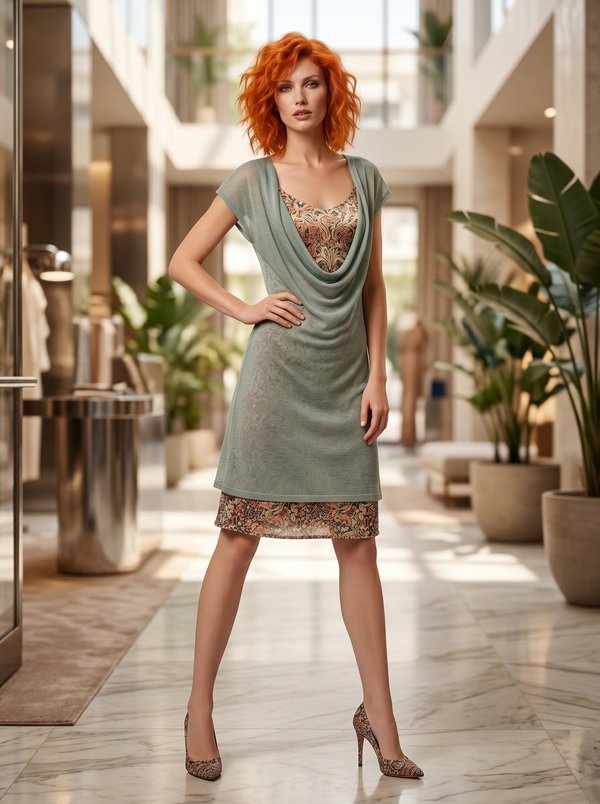
#2021
Two Layer Dress

#2031
V-Neck Pinafore Dress with Pockets
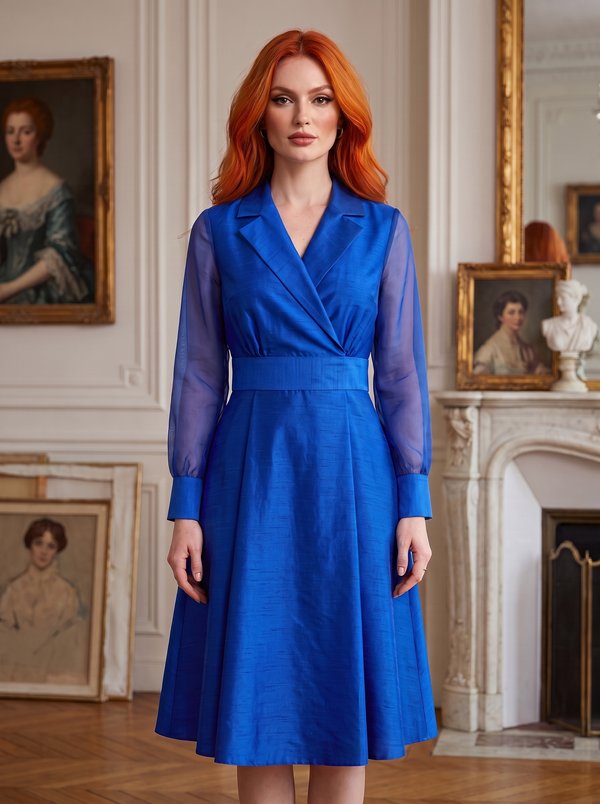
#2038
Notched Collar Faux Wrap Dress with Sheer Sleeves
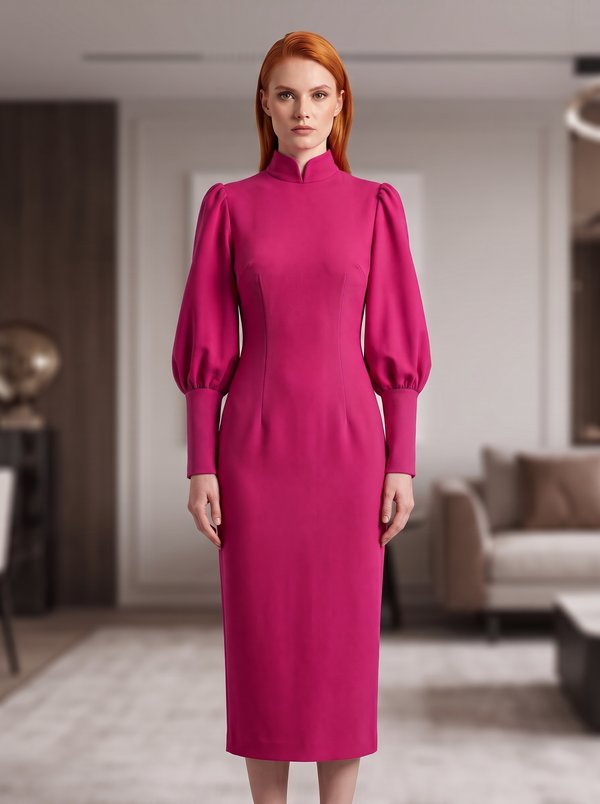
#2039
Puff Sleeve Mock Neck Sheath Dress

Minerva Support
Online