Professional made-to-measure digital sewing patterns — PDF · PLT · DXF AAMA
A loose, straight women's knit dress with three inverted pleats at the front neckline, a round neck finished with an interfaced facing, and full long sleeves gathered into narrow folded cuffs. Pull-on, no fastening. Drafted to your own measurements. Recommended fabric: knit fabric with low to medium stretch, made of natural or blended fibres.
A loose, straight women's knit dress with three inverted pleats at the front neckline, a round neck finished with an interfaced facing, and full long sleeves gathered into narrow folded cuffs. Pull-on, no fastening.
Silhouette: Straight and loose, hanging from the shoulders without waist shaping.
Length: About knee length.
Neckline: Round, finished with front and back facings interfaced with fusible interfacing, turned inside and tacked at the shoulder seams and centre back seam.
Front: Cut in one piece on the fold, with three inverted pleats basted along the neck edge and released below.
Sleeves: Long, one-piece, set-in; the lower edge is gathered into a cuff stitched into a ring and folded in half lengthwise.
Back: Two pieces with a centre back seam.
Finishing: Seams serged; hem turned to the wrong side and topstitched with a twin needle or coverstitch.
Beginner. Straight seams, three pleats, a faced neckline and gathered sleeves with folded cuffs; no fastenings.
Knit fabric with low to medium stretch, made of natural or blended fibres.
Tip: Cut pieces from knit fabrics should be sewn with a special elastic or narrow zigzag stitch. The hem allowance is topstitched with a twin needle or on a coverstitch machine to maintain elasticity. You can also sew pieces directly on a 3- or 4-thread overlock machine.

#5972
Three-Quarter Sleeve Scoop Neck Panel Pleated Dress

#5974
Dress with Decorative Front Draping

#5975
Draped Knit Dress
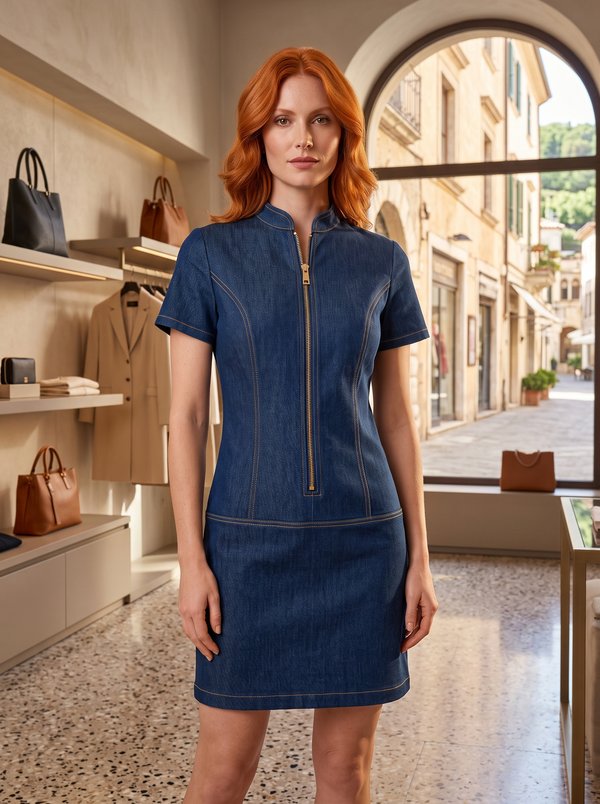
#5966
Short Sleeve Front Zipper Stand Collar Denim Dress
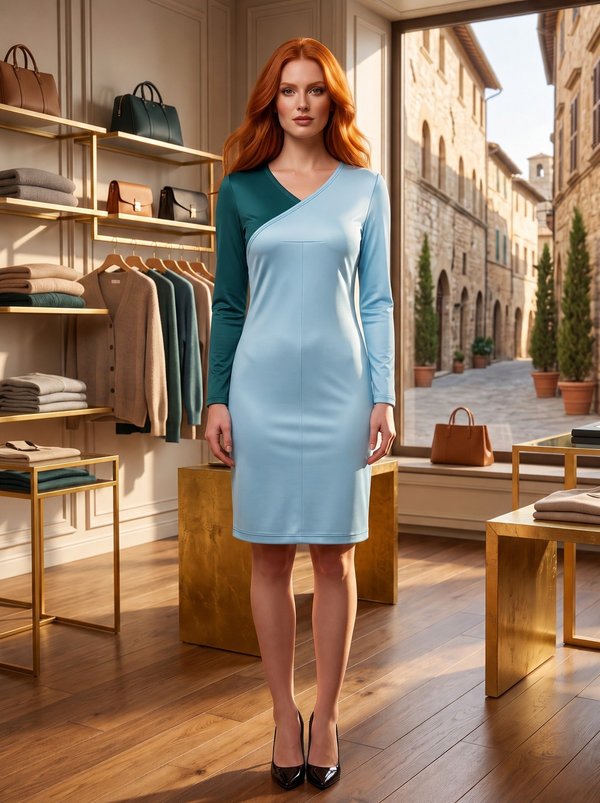
#5977
Color Block Asymmetric V-Neck Sheath Dress

#5964
Cheongsam Style Short Sleeve Sheath Dress
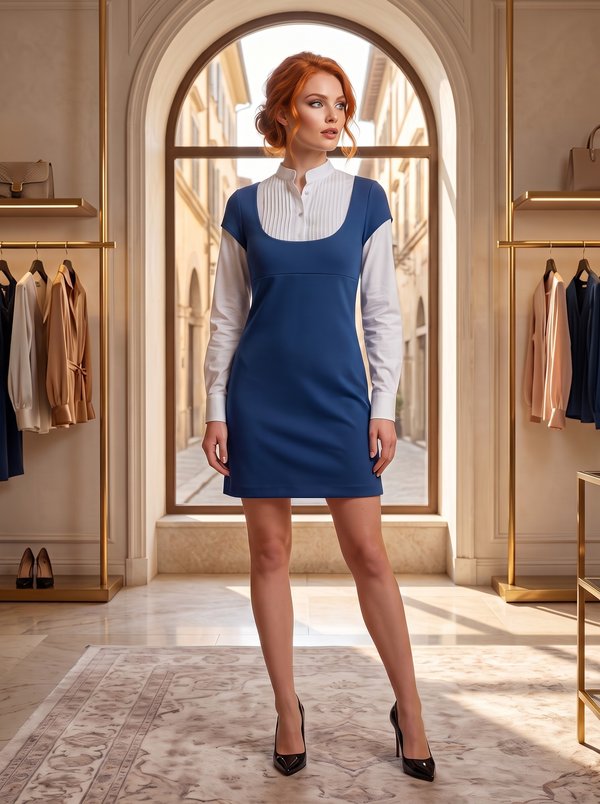
#5978
Mock Layer Tunic Dress
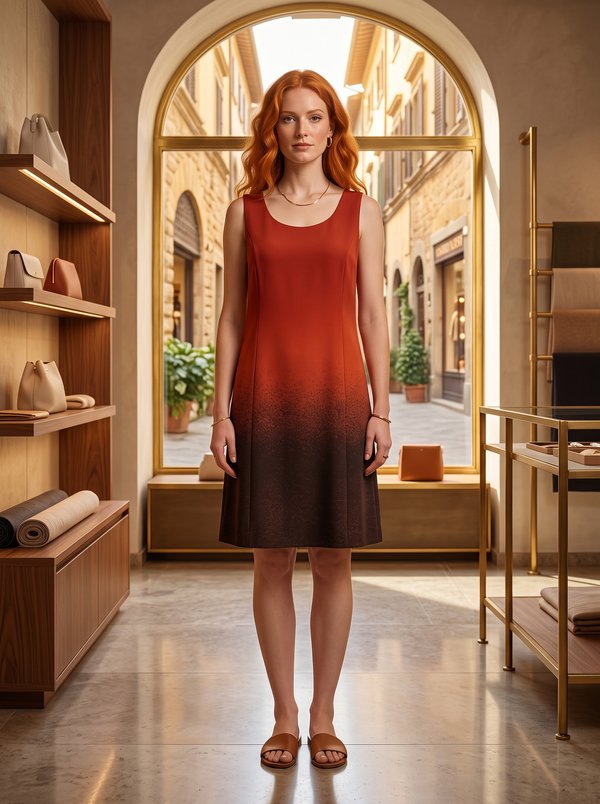
#5963
Sleeveless Princess Seam A-Line Dress

Minerva Support
Online