Professional made-to-measure digital sewing patterns — PDF · PLT · DXF AAMA
A women's hip-length pullover blouse made of two layers: a sleeveless inner layer with bias-bound armholes and an outer layer with short set-in sleeves. The curved hems of the two layers cross over each other at front and back. Drafted to your own measurements. Recommended fabric: blouse fabrics of natural or blended fibres, for example linen.
A women's hip-length pullover blouse made of two layers: a sleeveless inner layer with bias-bound armholes and an outer layer with short set-in sleeves. The curved hems of the two layers cross over each other at front and back.
Silhouette: Straight, close to the body, shaped by darts on both the upper and lower fronts (pressed upwards).
Length: Hip length.
Neckline: Round neckline with no facing: the outer and inner layers are stitched together along the neck edge and the inner layer is turned to the inside.
Sleeves: Short set-in sleeves on the outer layer. The inner layer is sleeveless, its armholes finished with a 4 cm folded bias binding.
Closure: None; the blouse goes on over the head.
Back: Upper and lower back each cut in one piece, with the same curved, crossing hems as the front.
Finishing: Hems of both layers and the sleeves overlocked, turned up and topstitched; the two layers are tacked together by hand at the side seams.
Intermediate. Two layers joined at the neckline, bias-bound armholes, set-in sleeves and curved hems.
Blouse fabrics of natural or blended fibres, for example linen.
If the patterns have a double contour, they include seam allowances. If the contour is single, the patterns do not include seam allowances. Seam allowances: bottom edges of the blouse and sleeve – 1.5 cm, all other seams 1 cm. Attention! First, print out the paper patterns and lay them out on the fabric width (fabric width can be from 90 cm to 150 cm) to determine how much material you will need (do not forget to account for paired and symmetrical details).
When stitching pieces, pay attention to the notches - they must match! Markings on patterns are made on the right side!
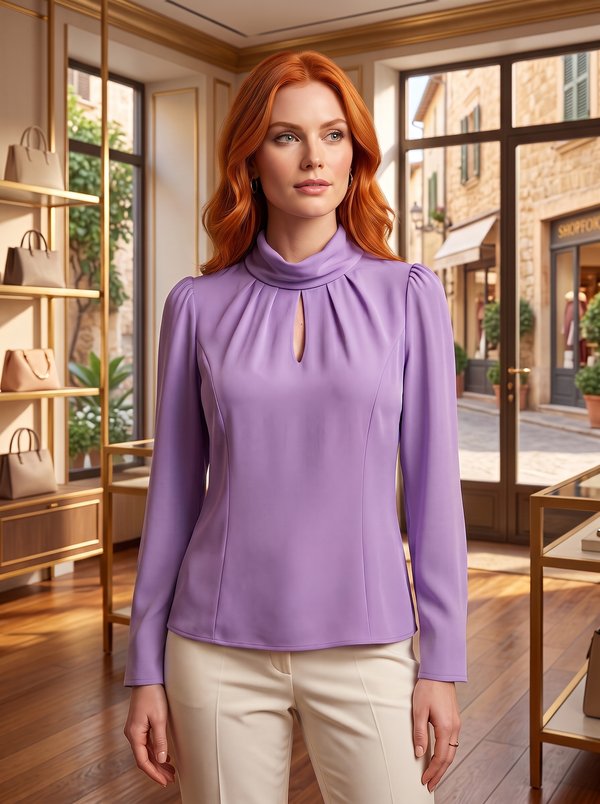
#4666
Pleated High Neck Long Sleeve Blouse
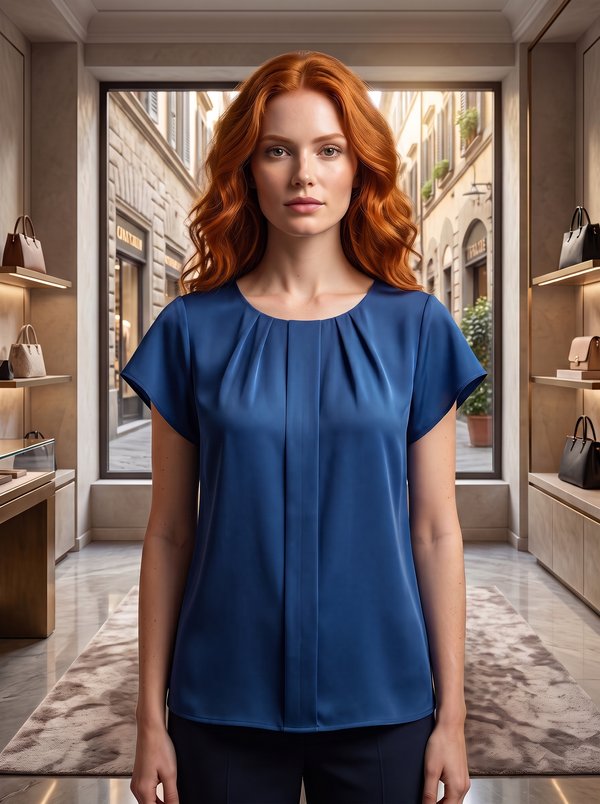
#4664
Pleated Neck Blouse with Front Pleats
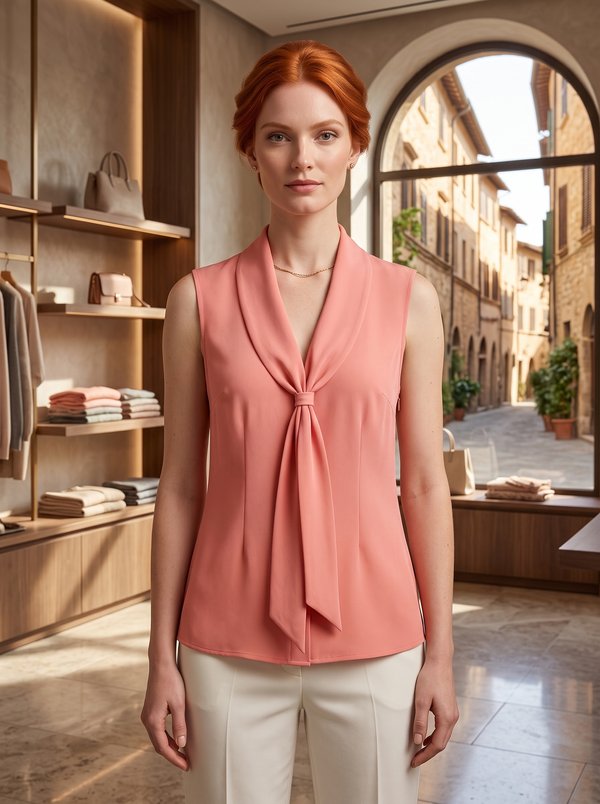
#4674
Sleeveless Scarf Tie Blouse
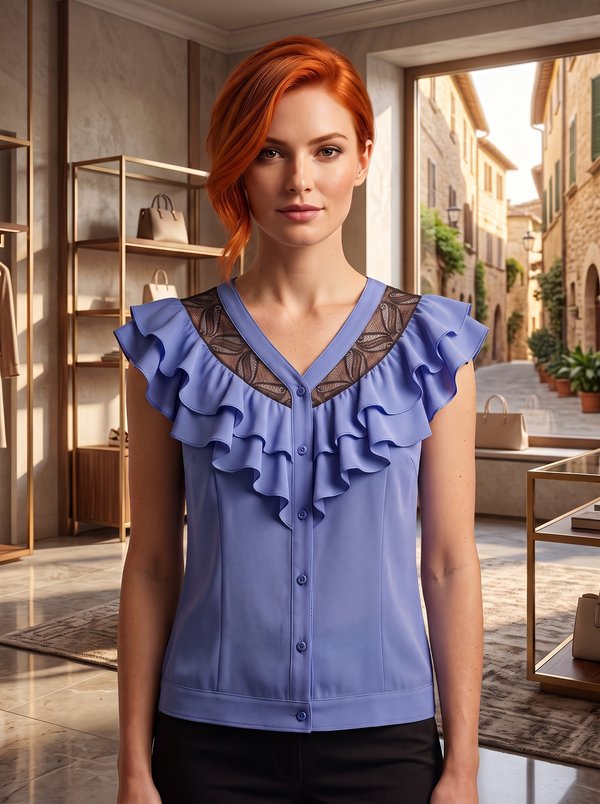
#4675
Lace Trimmed Ruffle V-Neck Blouse
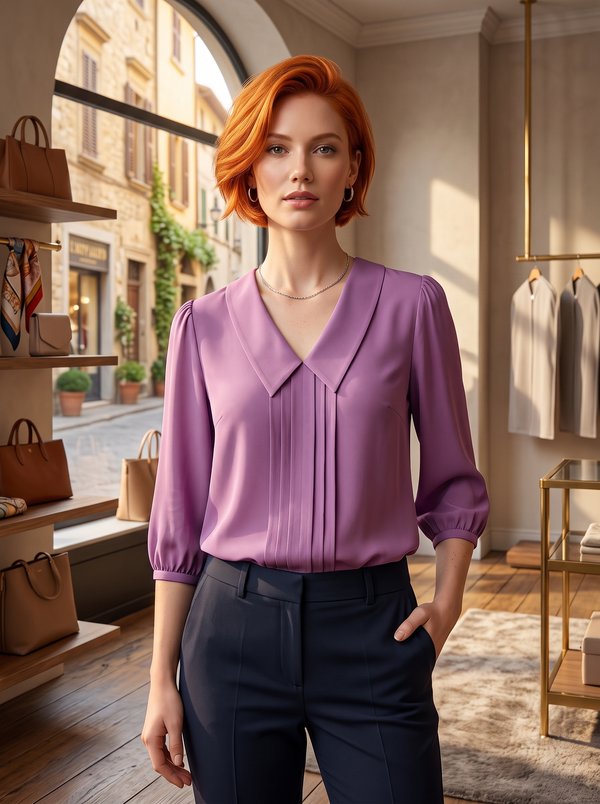
#4662
Pleated Neck Blouse with Wide V-Neck Collar
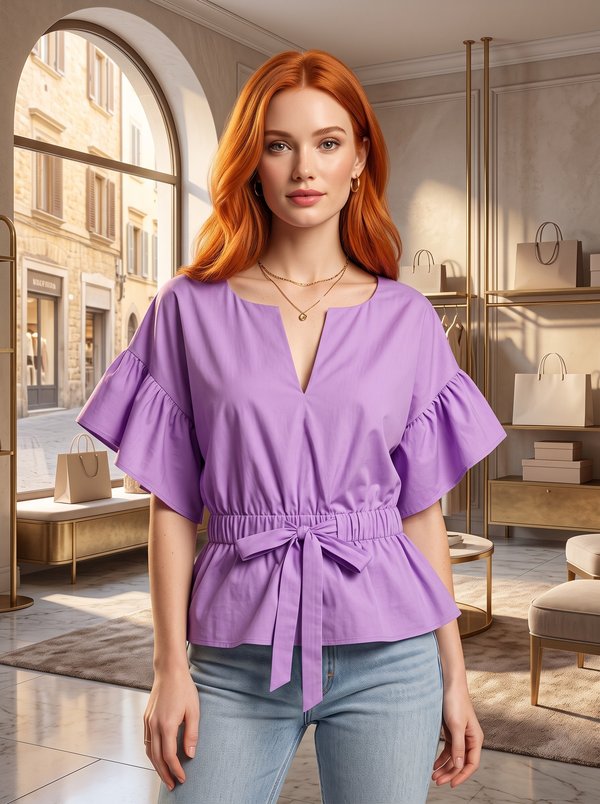
#4676
Ruffle Sleeve Elastic Waist Blouse with Front Bow
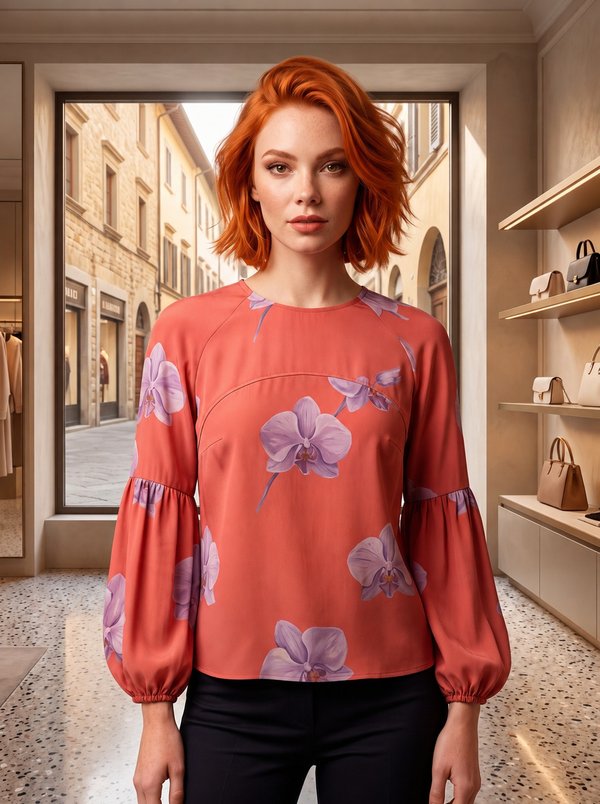
#4661
Balloon Sleeve Raglan Blouse
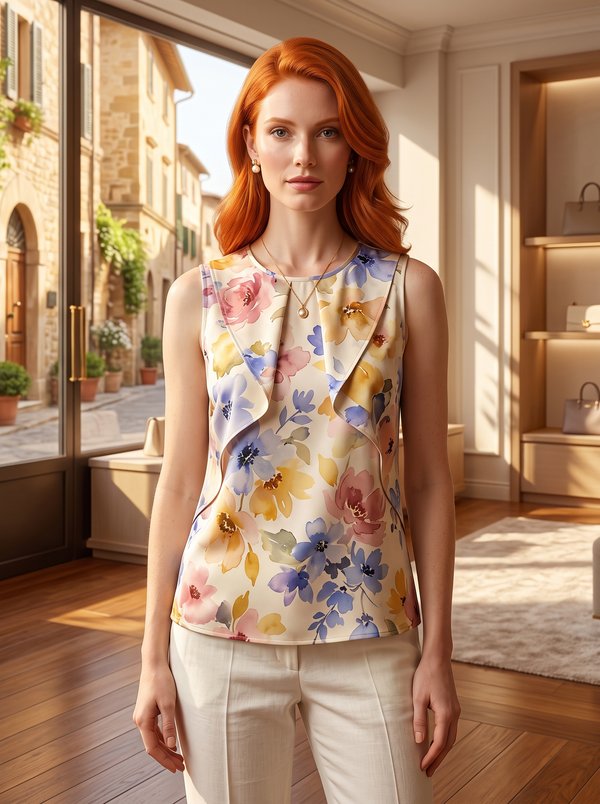
#4677
Sleeveless Blouse with Wavy Flounce

Minerva Support
Online